
What’s in a name? Well, everything and nothing. Let’s discuss.
Warning- Contains spoilers from Outlander Episode 708: Turning Points
Let me begin with the most obvious understatement I can offer: war makes a mess of everything. It turns likable, smart leaders into infamous traitors. It pits cousin against cousin, father against son, and friend against friend. For the second time this season a character asks of one of our time-travelers, will this be worth it? Yes, they assure them, because ultimately liberty is a worthy cause. But it’s messy. As this episode smartly demonstrates, war can be both entirely meaningful and entirely meaningless—sometimes the causes for which we die are less important than who we choose to have beside us at our deathbed.
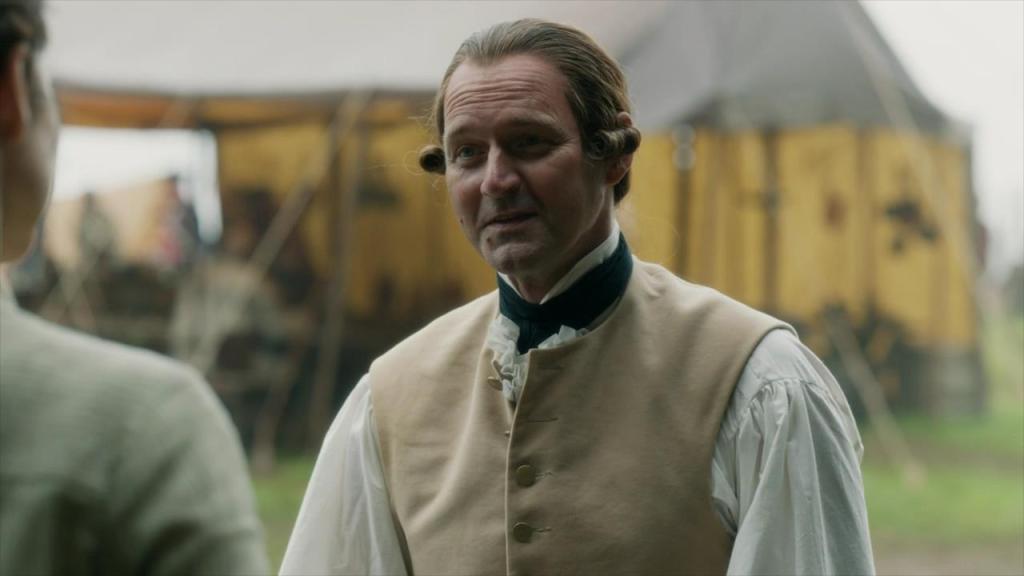
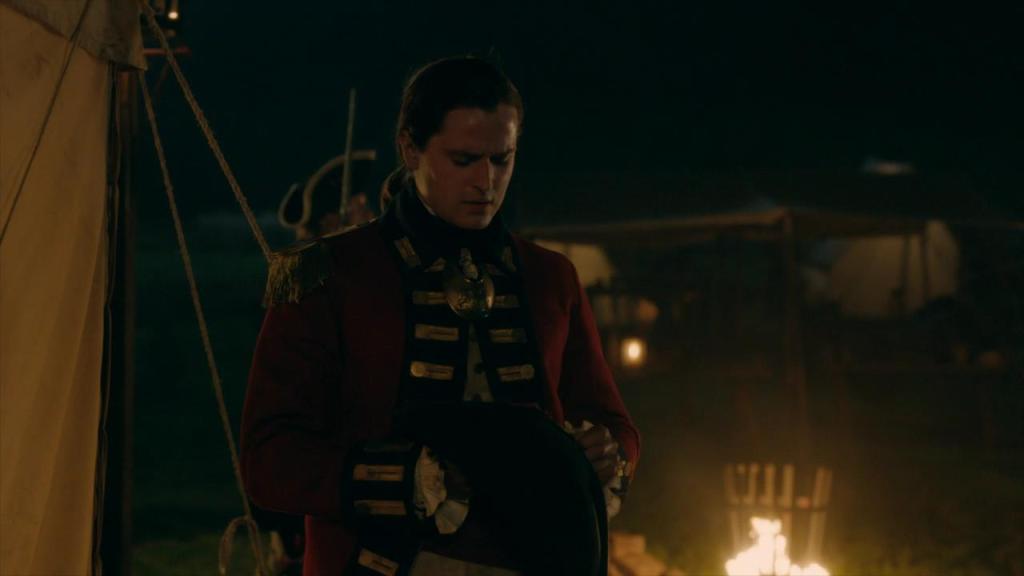
In an episode in which Benedict Arnold is introduced, it is appropriate that this hour focuses thematically on identity: American or British, Lieutenant or Captain, Sugarloaf or Mount Defiance. Quaker, Mohawk, Highlander…like the tricorn plucked from the battlefield at the start of the hour that ultimately ends up on William’s head, this episode is all about the hats we wear.
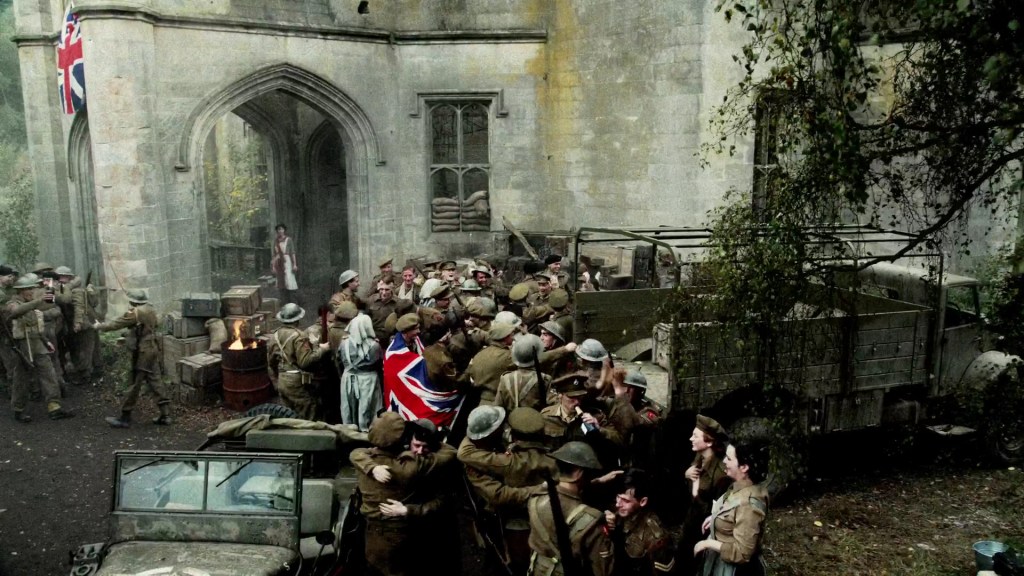
But, as Claire stands beneath the King’s Colours in the British camp, we are reminded of how easily identity shifts. Thirty years ago she stood beneath the Union Jack as British and American Allied forces claimed victory in Europe. The French will enter the Revolutionary War after Saratoga, but in 168 years British and American troops will help liberate France. German Hessian soldiers will ultimately comprise nearly a quarter of British forces during the Revolution, and in a few centuries the United Kingdom will lose hundreds of thousands of soldiers defeating the Germans. Friends become foes and our enemies now are often not our enemies in the future. Moreover, they are not always our enemies in the present— they can be kinsmen, friends, and respected peers. Politics—and the identities that accompany them—are constantly shifting.
The Season 7 promotional artwork asked of us, “when do you belong,” which marries nicely with what is presented to us thematically during the season and within this episode. Most obviously, our characters this season examine what century for which they are meant. More abstractedly, they must determine when it is appropriate for them to “belong” to various groups or entities. Do they belong in the twentieth century or in the eighteenth? Do they belong in this war and to what degree and for which side? Does one still belong to the Quaker faith if put out of Meeting? Do we belong to a tribe if we are asked to leave? Do we belong in a family even if we are several generations removed? When do we belong?

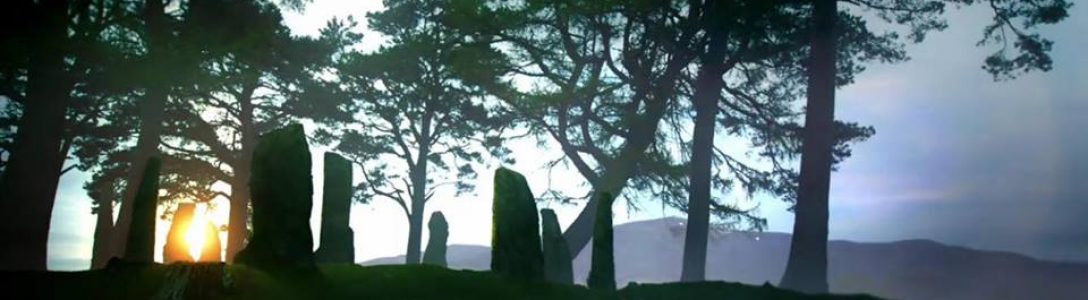
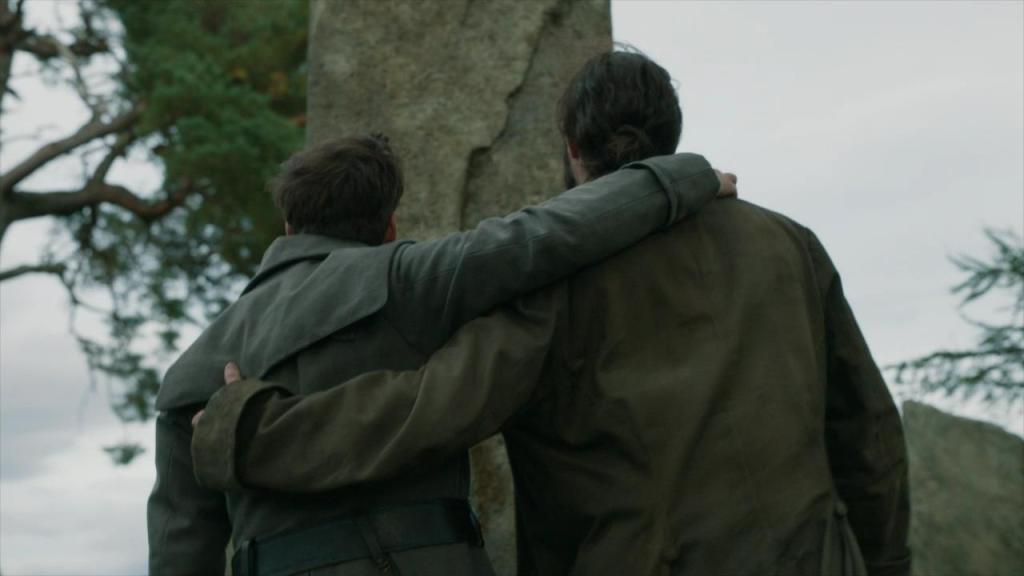
The answer, this episode seems to argue, is whenever and wherever our family needs us. Buck MacKenzie does not belong in the twentieth century, and Roger may not belong in the eighteenth, but together they belong to both. The image of them walking toward the standing stones, arms embraced in solidarity, was one of the more beautiful scenes I can recall in this series. Isn’t that what we want when we endeavor to create family…a chance to carry our ancestors with us during our most difficult times?
Likewise, Jamie does not belong in the British camp, but he is summoned and follows to where family needs him. Cousin, Jamie and Simon Fraser say to each other, seeing at once in each other their childhoods in Scotland. They may belong on opposite sides of this war, but in the general’s final moments they belong only to the Fraser clan.
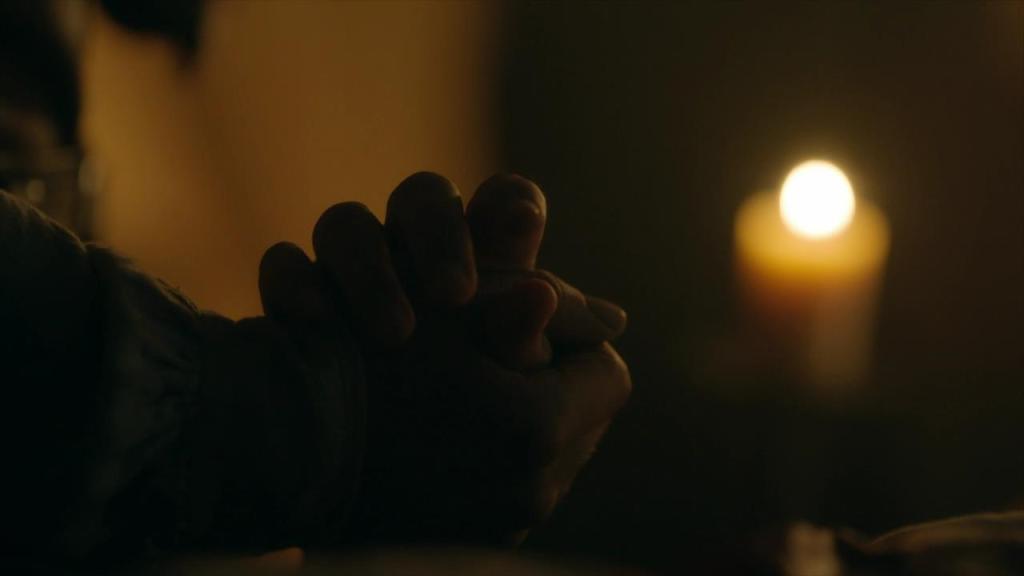
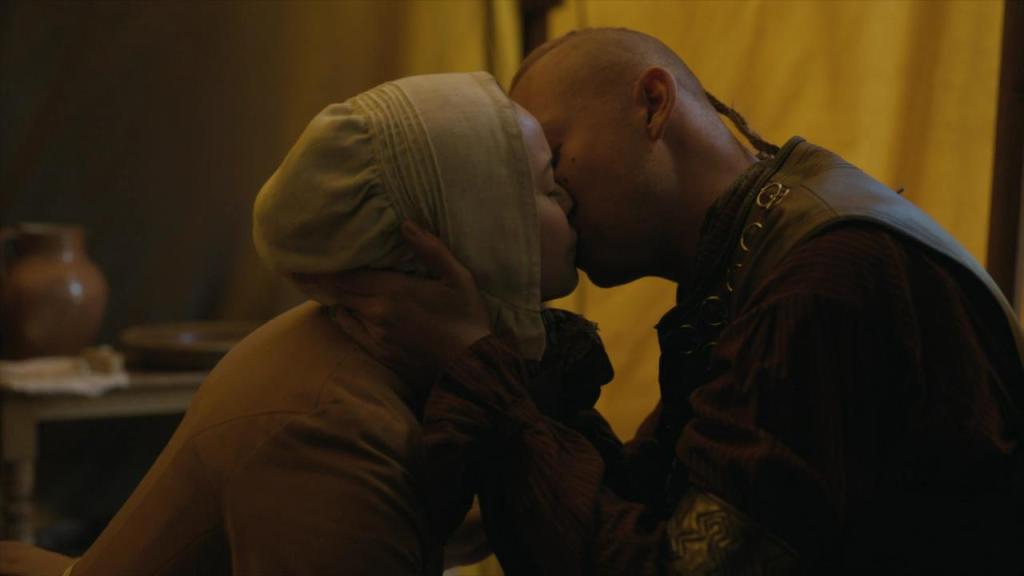
Additionally, this first half of the season proved we can be connected to a group even if we are removed or asked to leave. That Ian and Rachel find love in each other is unsurprising—they both identify with groups (Mohawk, Quaker) to which they no longer fully belong.
And it is arguably this sense of belonging that encourages our characters to reach for impossible heights. Jamie quotes to Benedict Arnold: “Ah, but a man’s reach should exceed his grasp. Or what’s a heaven for?” The line is taken from Robert Browning’s Andrea del Sarto, in which the titular character— a real-life Renaissance artist— looks back upon his life with a mix of nostalgia and regret. Similarly, Jamie recounts Genesis 18:32 to Claire, in which Abraham pleads with God to save the Cities of the Plain for the sake of ten just men. Both scenes appear in An Echo in the Bone, but they speak nicely to the season’s themes…an artist’s attempt at immortality or a man arguing with his Creator are both seemingly insurmountable tasks. And they underscore the trials with which our characters are presented—from traveling through standing stones, to surviving the Great Dismal, to attempting to overthrow the most powerful government in the world, everyone this season chooses to brave improbable odds.

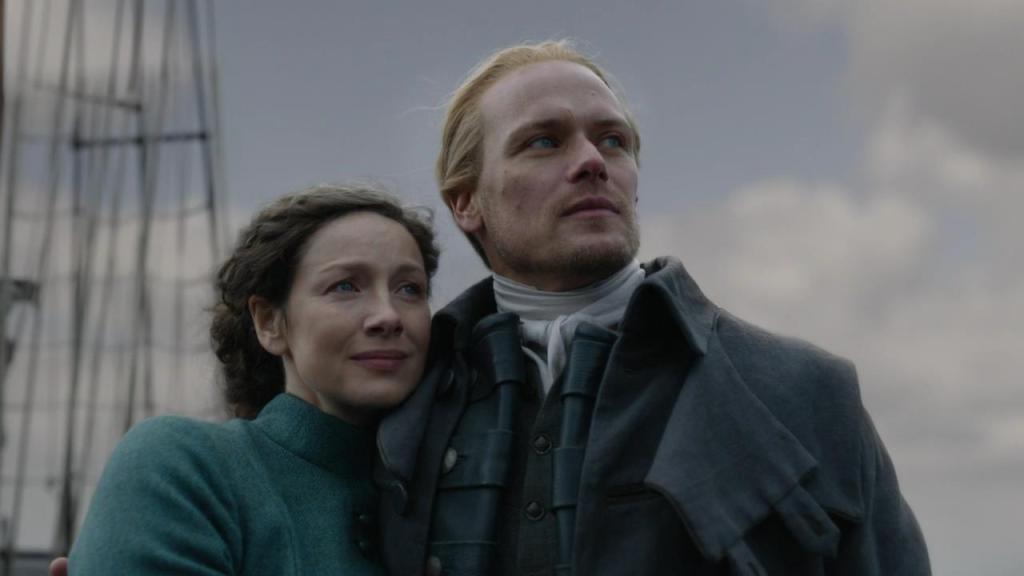
And they do it because they have each other. The episode concludes with Jamie and Claire watching the Scottish coastline come in to view. And, really, their story is nothing if not improbable. A war nurse traveling through time falling in love with a brave Scottish Highlander, together surviving abduction, imprisonment, war, loss, and twenty years apart? It’s a love story that exceeds grasp. But it’s one worth reaching for. Because, ultimately, it matters less what we call ourselves— or the names others give us—if we have our loved ones beside us when we gaze upon home.
Slàinte.
Screencaps provided by Outlander-Online.

 Outcandour