
Oof. I knew this episode was coming and still it came as a blow, pun not intended. I’m not sure how the writers will top this episode with the finale in two weeks, but I’m sure they’ll find a way. Ready to discuss the Season 7B penultimate episode?
Warning- Contains spoilers from Outlander Episode 715: Written in My Own Heart’s Blood.

Something went wrong.
The Second Law of Thermodynamics states that entropy—the inclination of nature toward chaos—increases within a system. Or, as Claire simplifies in the novel, “everything is going to pot all of them time.” Rarely is there equilibrium in the world; as Claire’s poignant opening monologue observes, there is always another war coming. And so it is this week within the world of our Outlander characters: the energy of the system tends toward entropy. A drawer becomes jammed, a child escapes the arms of her parents, a sister is arrested, men are murdered, churches and hospitals come under siege, and a civilian is shot. Order is lost and chaos reigns. Something went wrong.
Most of this episode centers around the Battle of Monmouth (June 1778), and it’s a fitting setting for a story that explores the idea of chaos. Indeed, everything about this battle—start to finish—was confusing. General Lee was forced to retreat early with a flawed initial attack, failed to inform Washington of his movements, and was subsequently court-martialed. Fighting was disorganized on both sides, and it wasn’t clear for some time who could actually claim victory. With fewer casualties suffered than inflicted the Americans ultimately claimed victory, but it was messy…and chaotic.
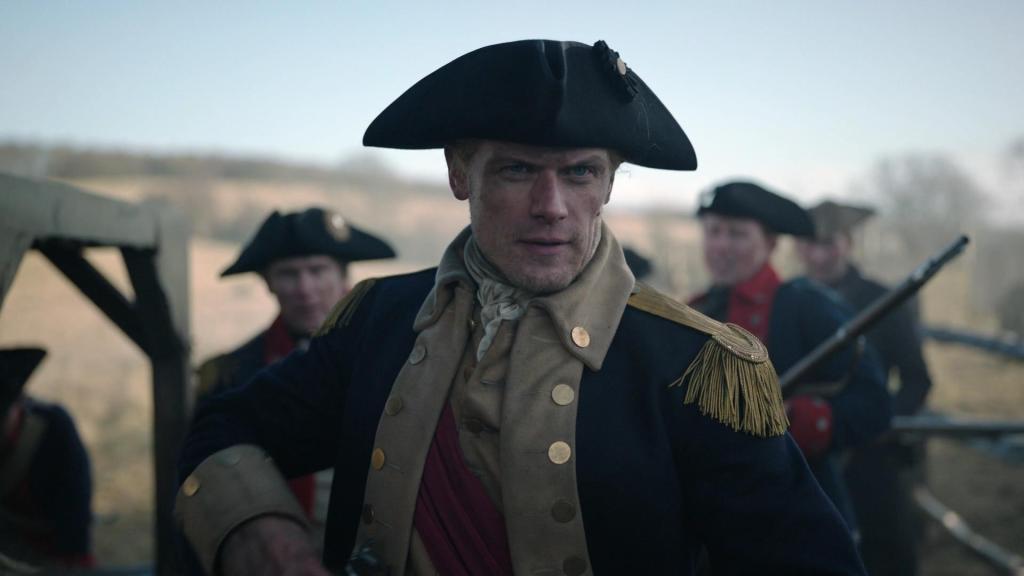
Chaos derives from the Greek khaos, meaning vast chasm, or void. In mythology, Khaos was the primordial emptiness, from which sprang Gaia (Earth) and Tartarus (a place of torment). But there was a third god created from Khaos, and that was Eros, who personified love. And how fitting such ideas are for this episode. As Claire admits she is sometimes unable to bear the ever-present void of the unknown, Jamie assures here that nothing is lost forever. Like the stars, from the emptiness shines the light. Love emerges within the chaos.
And what is love but an ideal that knows no bounds? Like light it, too, is infinite. Such a thread is commonly carried throughout the Outlander universe, and it’s no different in this episode. Somewhere in the past our loved ones live on…their existence and the love they gave us is infinite. And thus the title card of the episode is assumed to be Frank and a young Brianna admiring Dennis Malone Carter’s “Molly Pitcher at the Battle of Monmouth’ (1854). Did you see how Claire and Jamie have been added to the painting, denoting their historical existence at the battle? Below is the original with the show’s portrayal for comparison. Pretty sneak, eh?
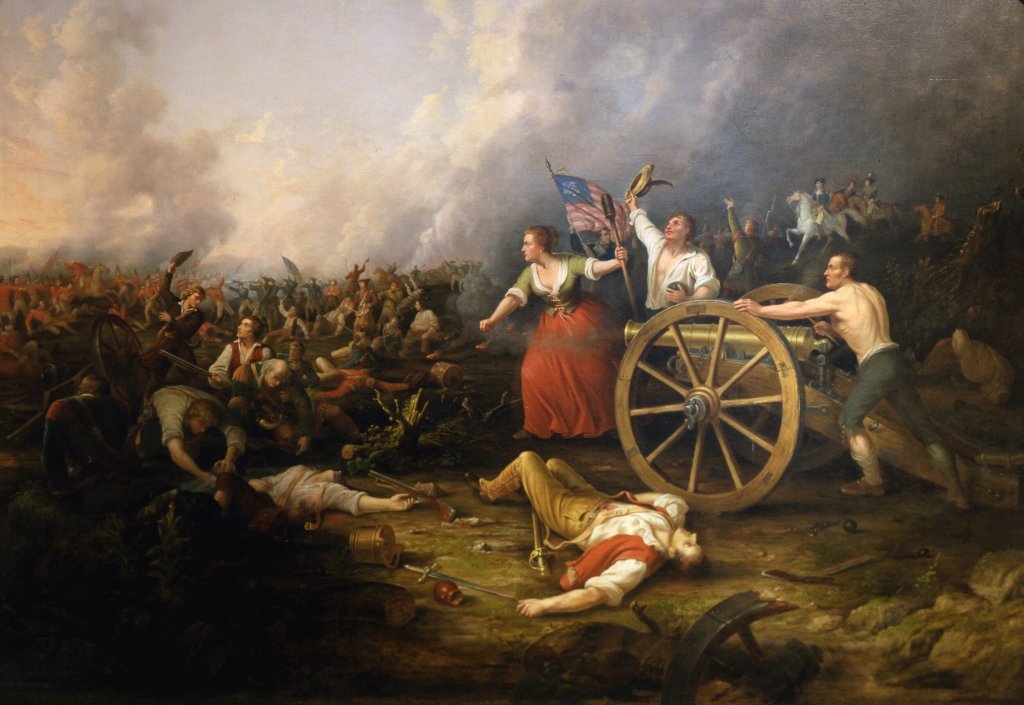
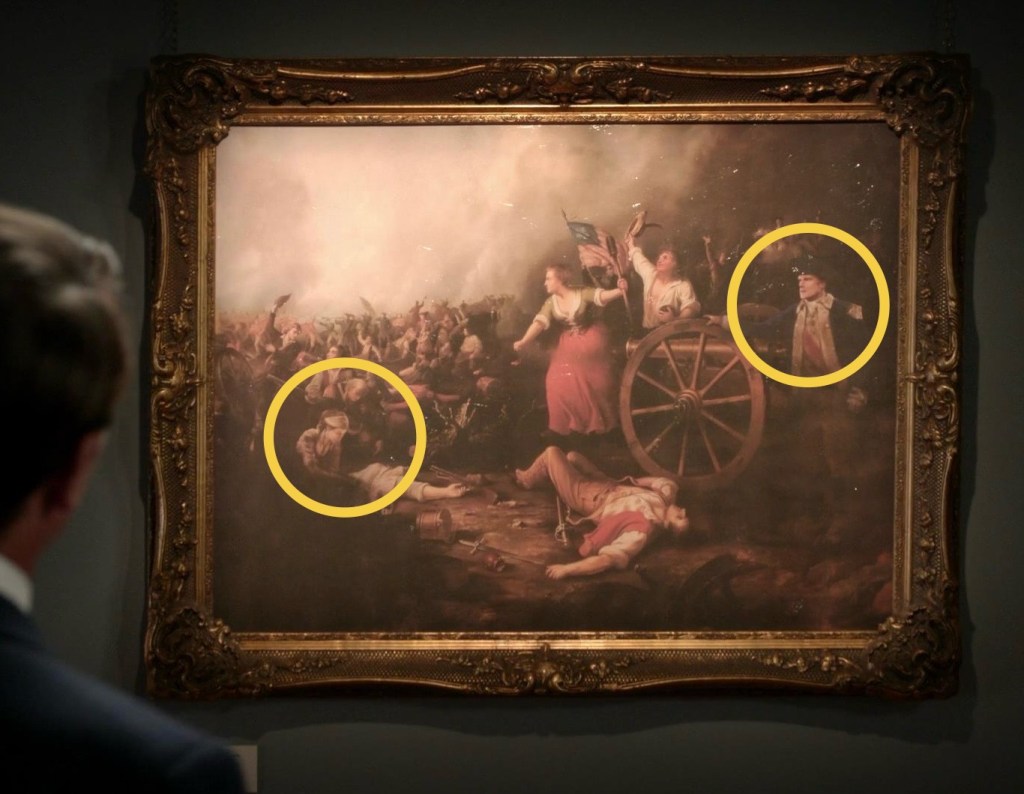
Did Frank know he was showing his daughter a painting of her parents? I’m prone to conspiracy theories regarding Frank, and so my hunch is yes. We know he discovered Claire and Jamie in the past, and considering he wrote a whole book about the American Revolution (which Brianna pulls from the shelf later in the episode), I suspect he was always trying to covertly give Brianna knowledge about her history.
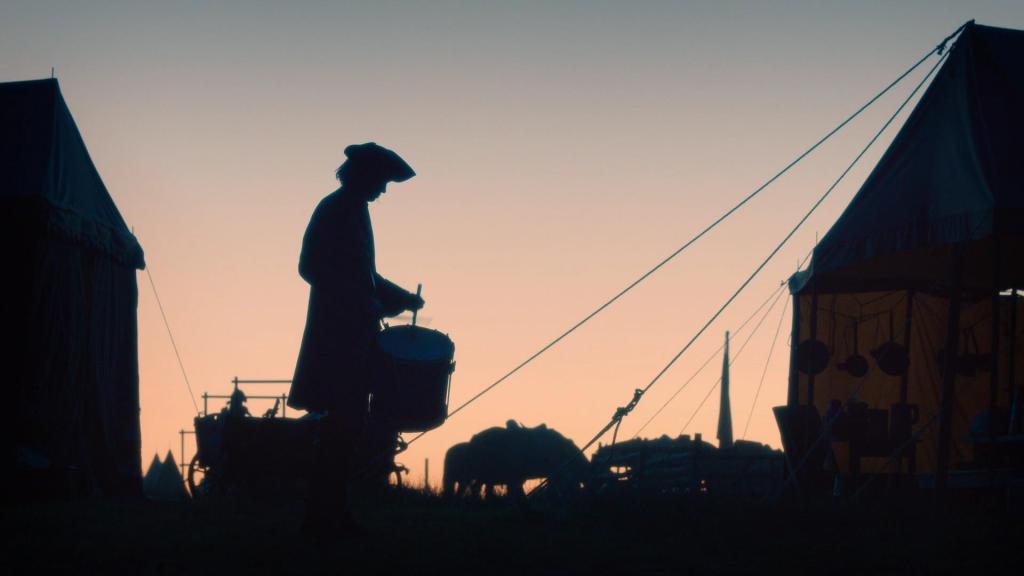
But history is the present in this episode, and we open with Jamie and Claire on the eve of battle. Sam Heughan does some beautiful work this hour, starting with the monologue Jamie gives about his mother’s funeral. Chaos in the world sometimes means the seemingly senseless loss of a young mother with her infant child. As a child, Jamie tried to heartbreakingly impart some logic to these tragic events…he, too, knows what it is to stand on the edge of a despairing void. Love can emerge from the chaos but grief often remains.
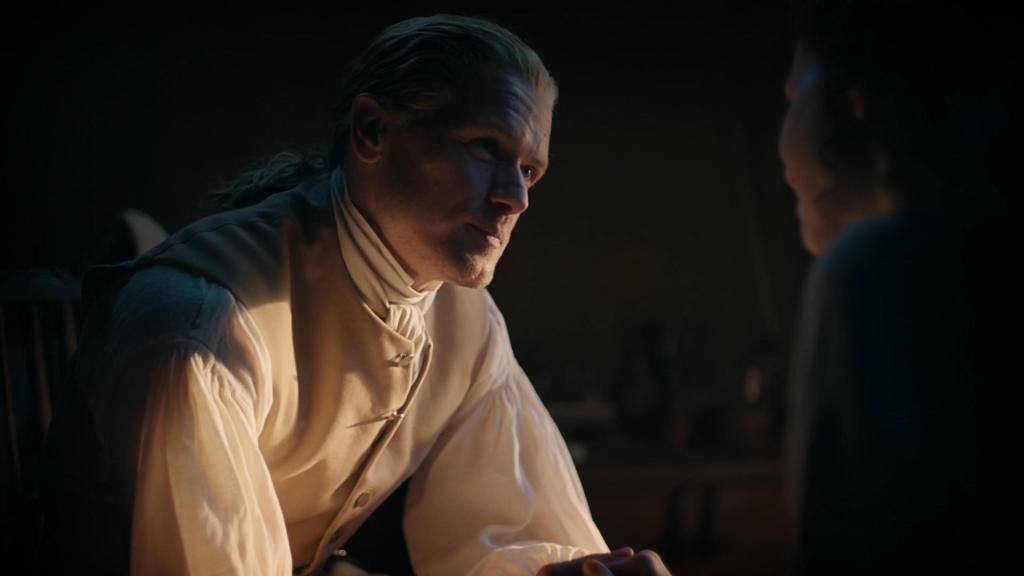
Something feels different this time, Claire worries aloud in campfire flashbacks. Death is an ever-present void in their world, but as always life cannot stop despite our anxiety. Work must be done, and so Jamie and Claire both see to their respective roles in this battle. We move forward as best we can, knowing that we sometimes have no control of the fate that awaits us.
Fate is always an interesting concept in a story about time-travel—are our presents and futures determined, always set and never-changing, one dependent upon the other? Such was the Greek view of fate…no matter how the heroes attempted to change what had been predicted, the noose of fate became tighter with every effort.
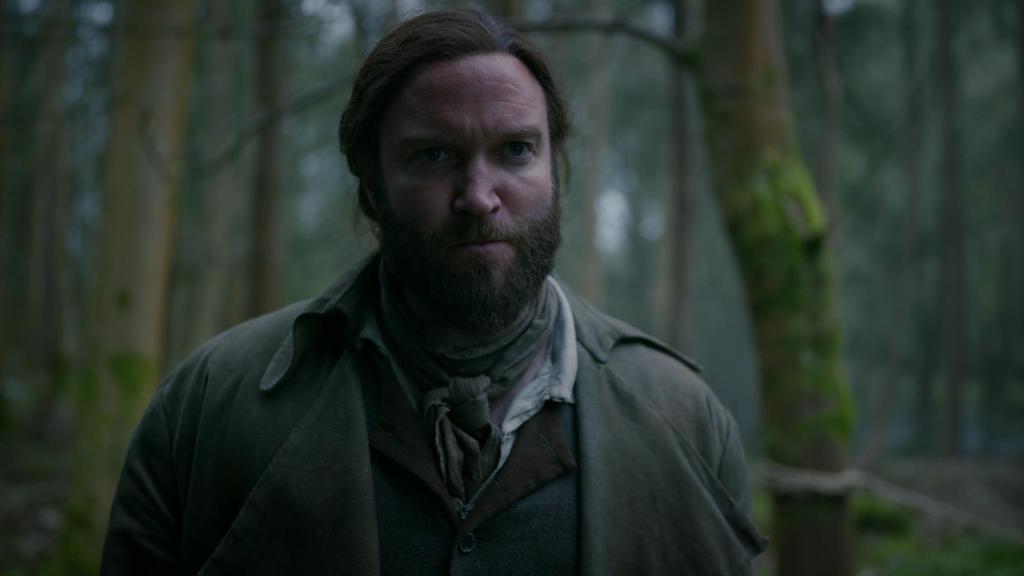
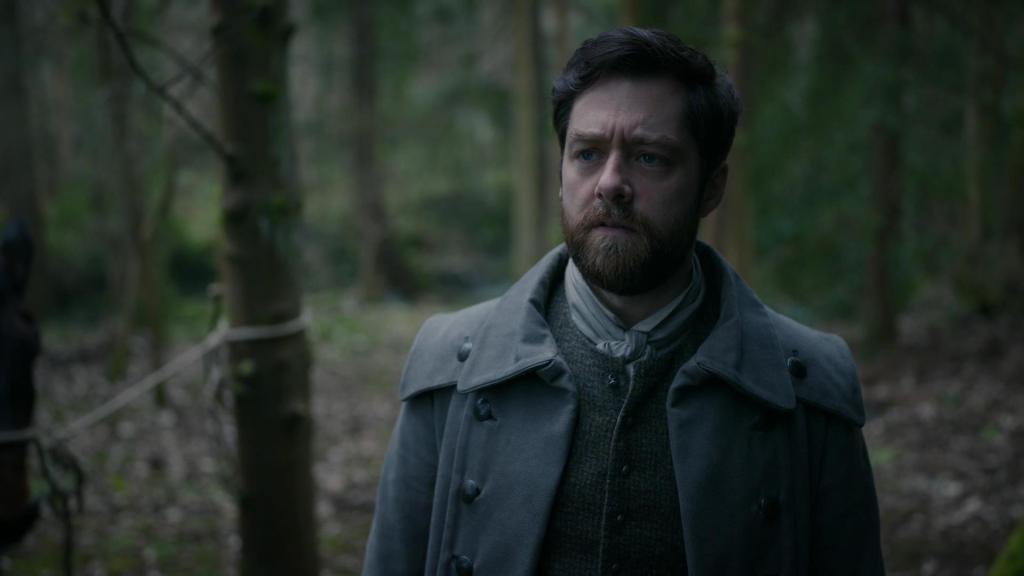
Or are the past and future fluid? Can we insert ourselves in a painting and change the course of history? The idea of predetermination versus free will is never far from the thoughts of a theologian, and so Roger confesses that he withheld information about Buck’s parents for fear of forever changing their fates. But, as Buck argues back, we don’t get to make decisions for others and such fears exist in an infinite, chaotic world of what-ifs.
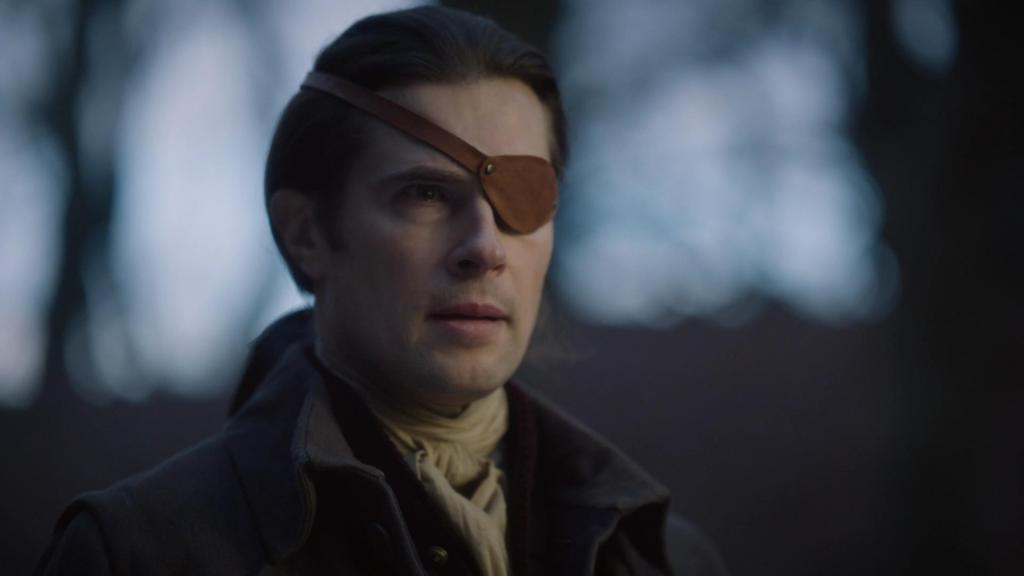
As Roger continues the search for his son, Lord John continues the search for his. He and Ian attempt to bargain with the Hessian deserters for William’s release, only to realize there is no logic and order amid directionless men…only chaos. Luckily, Lord John is a quick and accurate shot, despite only having one functioning eye. As I’ve said before, Ian and William are the next generation of Jamie and John, with each taking turns to save the other’s life with growing admiration and respect.
The laws of physics always prevail, and so it is amid the chaos of the field hospital. Saving the life of a soldier with a pneumothorax, Claire re-establishes the negative pressure within the plural space and thus earns the begrudging respect of Dr. Lecke. Energy, pressure, power…everything flows from a high to a low according to physics.
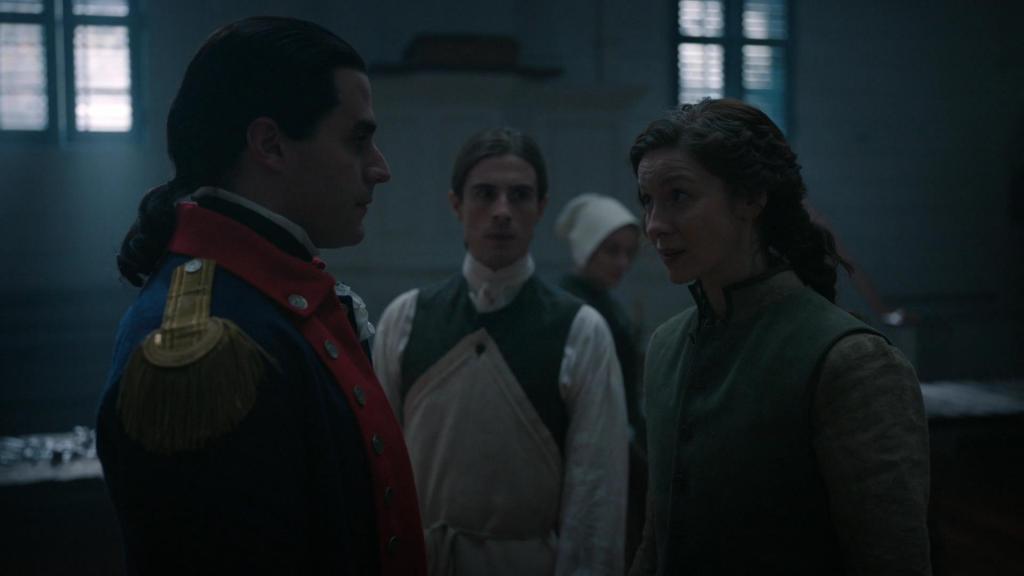
But although Lecke is a frustrating character from our modern perspectives, his obtuseness speaks to the explanation Claire gives to Rachel regarding man’s flaws and stumbles: we are all just doing what we think is best. Lord John keeping William’s parentage a secret, Roger doing the same with Buck, and Dr. Lecke trying to protect soldiers from what he assumes is an incompetent woman….everyone does what they think is the right course of action, no matter how flawed the thinking. This is how humans attempt to impart order onto chaos, for better or worse.
Roger and Buck return to Lallybroch and Roger attempts to harness the chaos one last time by leaving a letter for Brianna in the hidden compartment of Brian Fraser’s desk. The groundwork for this was laid earlier in the season, when Roger shows Brianna his discovery of the hidden drawer in Episode 705 (Singapore). Such compartments were common in eighteenth century furniture, placed there by the carpenter and often unknown by the desk owners themselves. There is therefore a method to this madness—Roger knows about the hidden compartment and Brian Fraser may not. Brianna knows about it, too, and Roger is counting on the compartment staying hidden for another 250 years until Brianna has a chance to discover the letter.
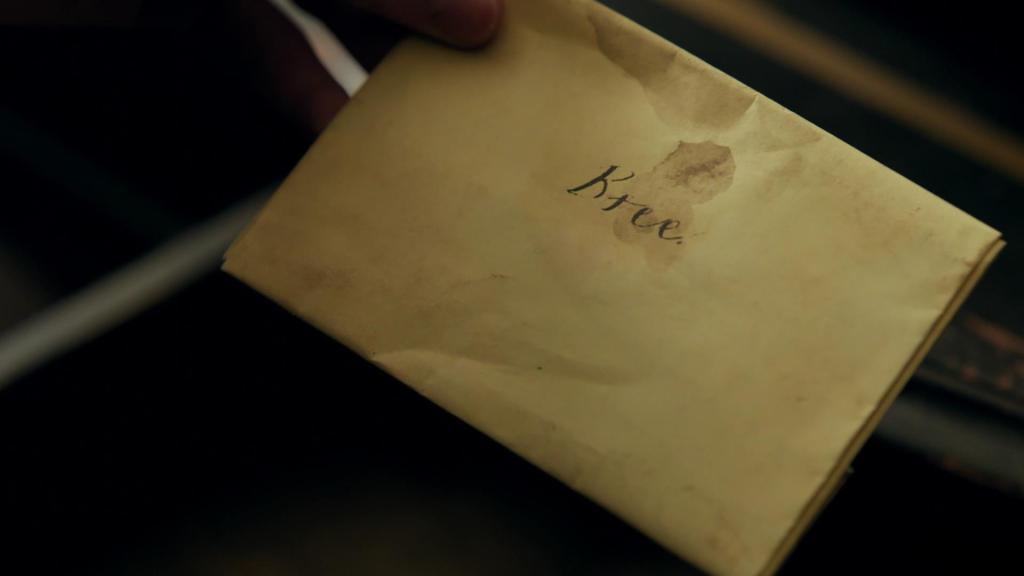
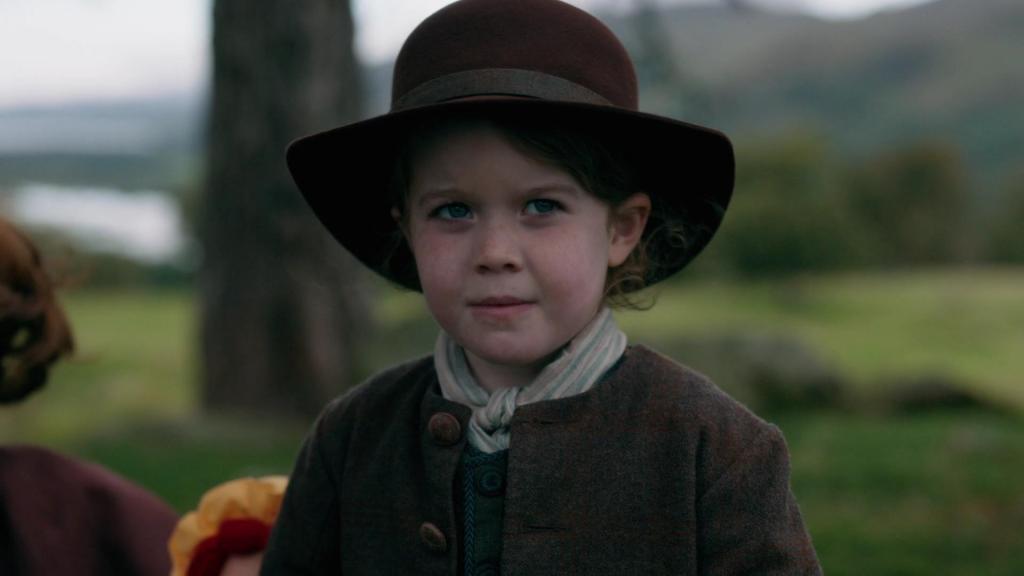
Which she does, and that’s the impetus for the MacKenzie family to once again travel through the stones. Children, I am convinced, are entropy incarnate with an ever-increasing state of chaos within their own systems. And so it is that Mandy escapes Brianna’s grasp to hurl herself through Craigh na Dun, leaving chaos in her wake.
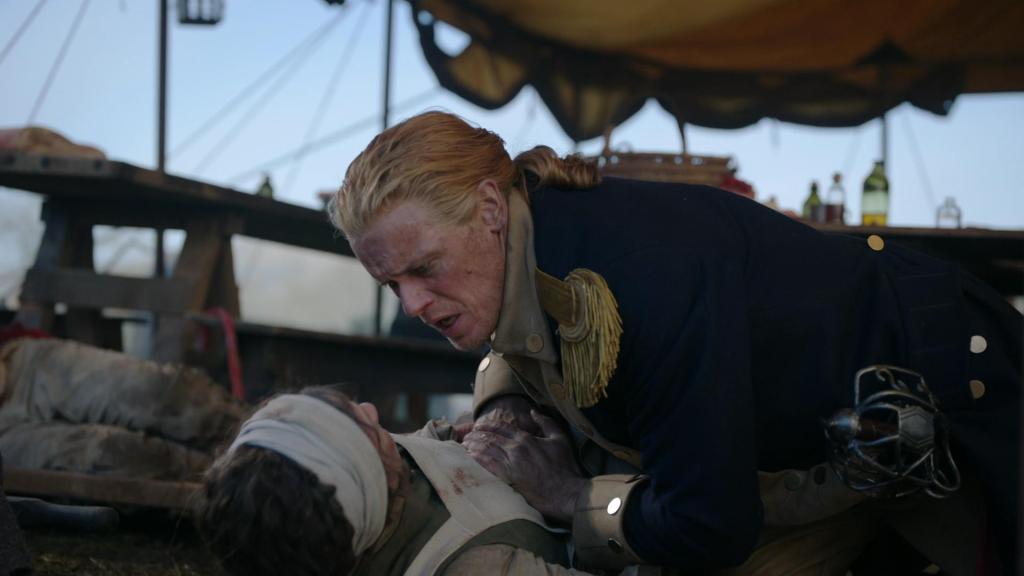
Elsewhere in the eighteenth century there is also ever-increasing chaos, as Fanny informs William that Jane has been arrested and the fighting at Monmouth encroaches upon the safe space of the church-turned-field hospital. Director Joss Agnew and writer Danielle Berrow did a great job with the climax of this episode, showing the inevitable breakdown of societal expectations when the adrenaline of war mixes with mob psychology. Order is lost, chaos reigns supreme, and Claire is shot.
Our world is governed by physics, but mankind is governed by hope. The stars are the original time travelers, bringing light to our world that is millions of years old. When we gaze upon the universe we are looking back into the past, and even when a star burns out its light lives on. Chaos is ever-increasing, but from the primordial void of chaos emerges love. We stand at the edge of the abyss and look for a hand to hold.

Sláinte.
Screencaps provided by Outlander Online.

 Outcandour
I’m so glad you pointed out the addition to the painting that Frank and Brianna are looking at toward the beginning of the episode. It goes by so fast that I didn’t see that, only had time to suspect that was Frank and Bree as a girl looking at a painting of the battle we were about to see portrayed.
I appreciate your ability to distill the overall meaning and theme of an episode. I felt that Claire’s voice over musings about war set the stage so well for the chaotic nature of the events in this episode.
Thank you for your commentary.
LikeLiked by 1 person
Thank you as always for reading and commenting! The changes to the painting were subtle and well done…I discovered it when I went in search of the original and thought wait a minute! They changed it!
The opening with Claire’s voiceover made me so nostalgic for every season. It’s been so good for so many years.
LikeLike
if Jamie Fraser is in a museum masterpiece, he’d likely be identified by art historians as General James Fraser who served in the Continental Army under George Washington. Which begs the question: Why couldn’t Roger, the self-professed “dog with a bone historian,” find him? Instead, he finds the obscure pamphlet by A. Malcolm. To make me feel better about this, I’ve decided that they are NOT actually in the painting, but because Frank likely knows more about his time traveling wife and Jamie Fraser, he “sees” them in it. So I like to think that the title card is from Frank’s perspective. Which adds a psychological dimension to it.
LikeLike
goosebumps reading this one
spot on and well done~
LikeLiked by 1 person
Can’t help but think after reading another fantastic analysis that our country is headed toward major chaos.
LikeLiked by 1 person
[…] Berrow, who is also credited as the lead writer for Outlander Episodes 508 (Famous Last Words) and 715 (Written in My Own Heart’s Blood). Berrow seems to excel at writing inner conflict….at writing personal frictions, if you will. […]
LikeLike