
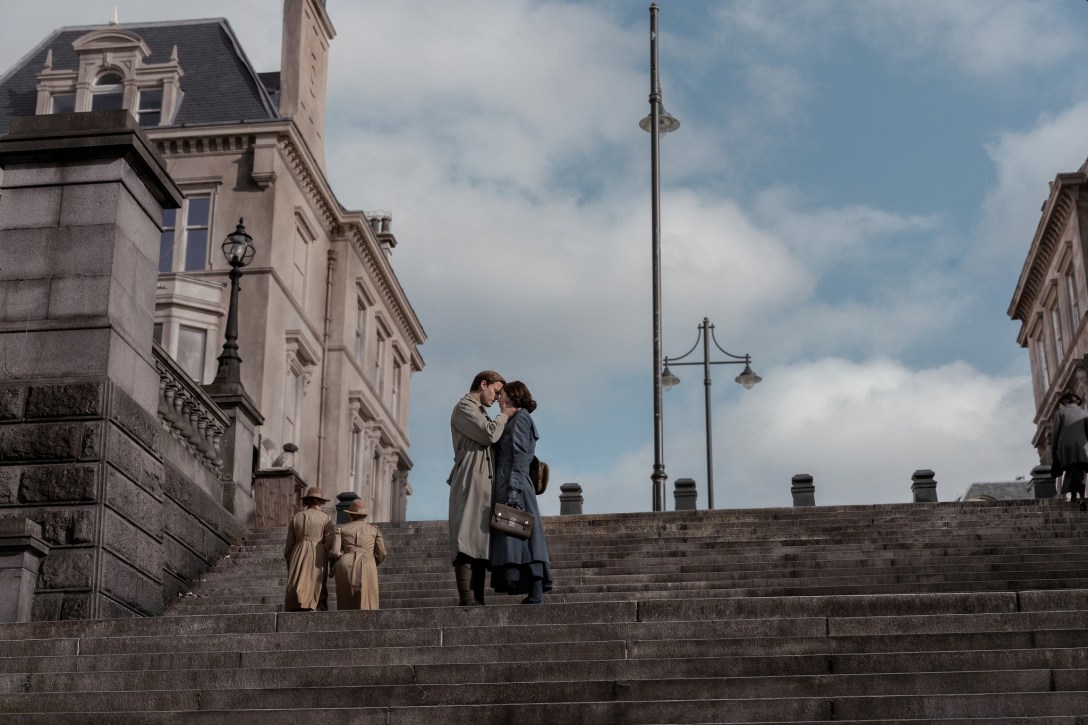
Second verse, just as great as the first. Let’s continue discussing the two-episode series opener of Blood of My Blood, shall we?
Warning- Contains spoilers from Blood of My Blood Episode 1.2: S.W.A.K (Sealed with a Kiss)
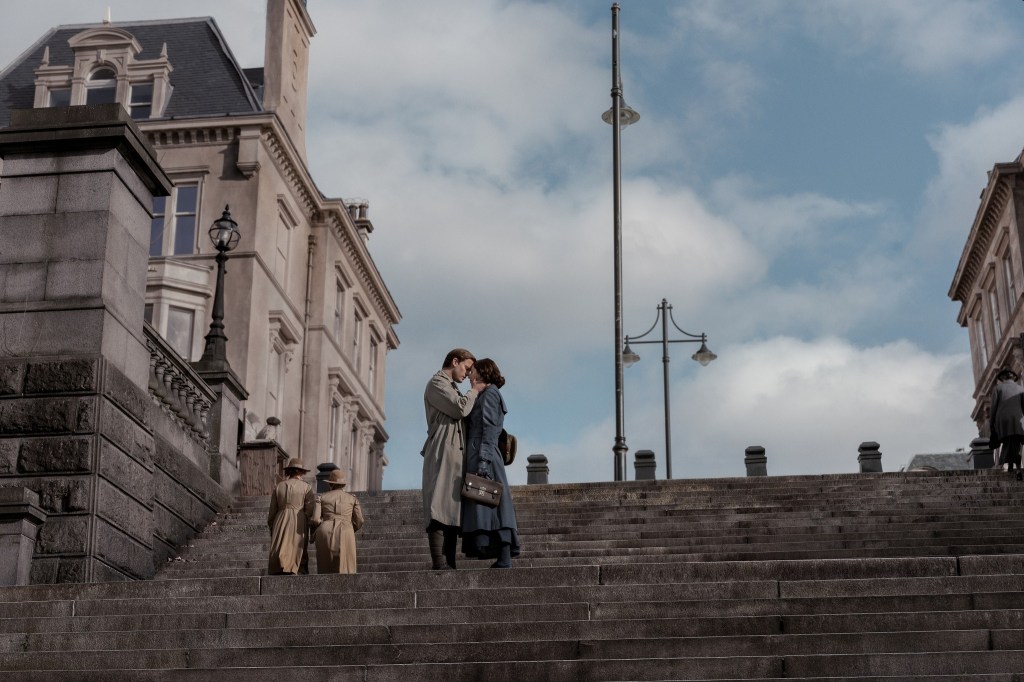
“I don’t like to blow my own trumpet, but it seems I am quite the horologist.”
A master of time? We shall see.
Time, it has been said, is an illusion. As Julia recounts from Campbell’s tales of the Highlands, people can be lost to time. Wanderers fall through fairy rings and lose years in an instant. Soldiers fall into the trenches of a World War and lose the years of their futures. A broken pocket watch can be fixed…time can be paused and then restarted. Raindrops fall in seconds but carve canyons over eons. And two lovers who lose each other over two hundred years? Well, we’ve certainly been here before.
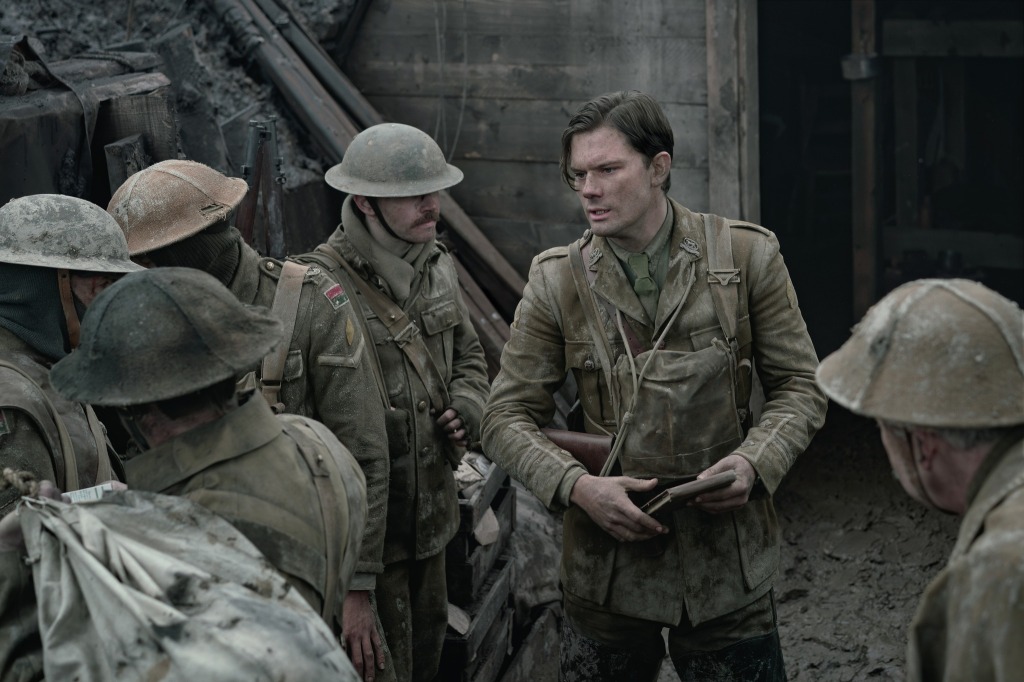
We are introduced to Claire’s parents exactly as we were introduced to Claire: as witness to their bravery and strong moral compass in the face of war and extreme danger. As we watch Henry Beauchamp openly defy orders in these opening minutes—risking life and literal limb to save a fellow soldier—it’s quite easy to tell that the apple fell very little from the tree in regards to Claire.
Casting always does a phenomenal job, but they really nailed it with Jeremy Irvine. He doesn’t overtly resemble Caitriona Balfe physically (whereas Hermione Corfield very much does), but he manages to move his body and face in the same confident and openly honest way we’ve come to expect from Claire. Cool under pressure and reassuring even in the face of death, we are meant to understand that Claire was always this soldier’s daughter.

And Claire’s determination to overturn unjust social orders? Well, that evidently comes from her mother, Julia Moriston, a plucky and fiercely intelligent young woman working in the Censorship Department of the War Office. Imagine, for a moment, having this job…reading thousands of letters from scared, lonely, and dying soldiers and serving witness to their rawest emotions. It’s a reminder that we can be time travelers while living in the present, as Julia reads testimony that seems come from a different time and place. Did you catch, by the way, the desks in charge of Henry’s unit? C and J? Tricky, tricky.

Julia and Henry, through fate or fear or hope (or all three), strike up a letter correspondence and fall in love. And as often happens in wartime, a letter courtship becomes a physical romance that becomes a marriage. Still, this love feels organic and believable and by the time Henry and Julia have both fallen through the standing stones at Craig na Dun we are wholly invested in their relationship.

The fun of time travel stories is often watching characters realize they have stumbled through some supernatural portal, lost in stupor at the very different world around them. Having Julia and Henry travel to the eighteenth century, however, upends our expected time travel tropes, because it is not immediately clear to either one that this is a wholly distinct century.

Henry and Julia leave a time in which horses were still a very common means of transport, and so it isn’t an immediate red flag to Julia to stumble upon a horse-drawn wagon. Julia and Henry likely did not have electricity in their childhoods, and indeed it was only a very small percentage of British homes that had electricity by 1920…finding oneself in a castle or tavern still lit by candles would not be an aberration in the earliest parts of the twentieth century. So while Julia and Claire’s first experiences in the eighteenth century mirror each other in numerous ways (waking up in the same position, being hit on the head and hauled off by Highlanders, an escape thwarted by a handsome Fraser man, etc), they come to the realities of their situation quite differently—Claire’s is a shock, Julia’s is a slowly dawning nightmare.
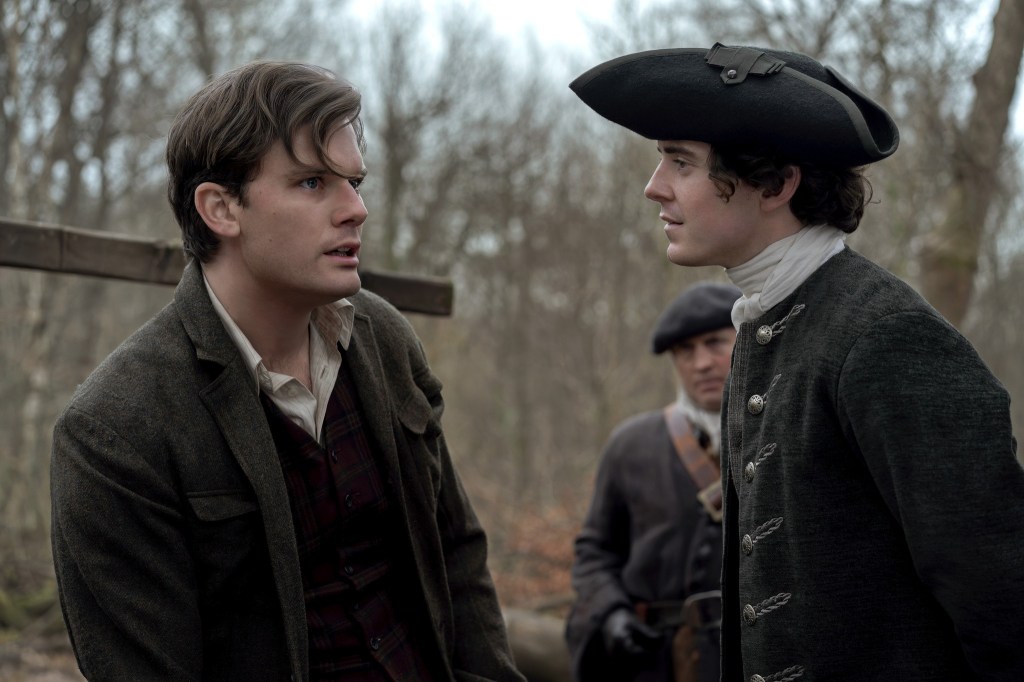
While Julia finds herself held captive as a servant to the lecherous Simon Fraser, Henry manages to keenly observe the nefarious shenanigans between the Campbell and Grant bladiers and thus impresses himself into the service of Isaac and Malcom Grant. And while Isaac Grant is dressed as gentleman and has a beautifully appointed house, it is quite clear that he is just as ruthless a Highland Clan leader as Dougal or Colum MacKenzie.

For what it’s worth, Malcom Grant still seems like a genuinely decent man, and so it will be interesting to see how much his story intertwines with the other four main characters. As a reader pointed out to me this week, one of Jamie’s middle names is Malcolm…a hint that this character may be rather significant indeed.

In a scene that will mirror her daughters nearly thirty years later, Julia attempts escape from Castle Leathers but is intercepted by Brian Fraser. When both are caught out by Bolluch, Brian intercepts her punishment and takes her beating…a scened that will be mirrored by his child in another thirty years. And while Jamie taking Laoghaire’s punishment many years later will be open to her misinterpretation, it is clear here that Fraser men are simply just good men. (This scene is also a nice reveal that Mistress Porter is Brian’s mother, thus explaining why she is so insistent that Julia steer clear of Simon Fraser.)
Hope springs eternal. As Julia and Henry search for each other, writing letters that are unlikely to reach the other, they are trapped between the “here”ness and the “there”ness of their time travel. Like other time travelers in the Outlander universe, they search for each other across centuries, unwilling to rest until the other is found.

Henry admits that he is only pretending to be brave…but isn’t that what bravery is? Pretending to be so? Courage knows no other way…it is an illusion that we choose to believe. Such, also, is time. We fall through stones and journey across centuries, releasing our love to the invisible strands of time and sealing our hopes with a kiss.
Slàinte

 Outcandour
While not written by Diana the first two episodes certainly seem like something she would write. The way the story is being told matches the acting and the feeling of the first Outlander series. I am looking forward to the rest of the season.
Sent from my iPhone
LikeLiked by 1 person
I thought this was handled quite well. I wasn’t certain how the story of Claire’s parents would be fleshed out, as Diana didn’t really say anything about them except that they died when Claire was young. So far, this seems quite interesting and a good way to explain Claire’s ability to time travel, since it seems to be a genetic trait handed down through families.
I missed that Mistress Porter is Brian’s mother, but it certainly does explain her being careful to warn Julia about the Old Fox’s lecherous habits.
I read somewhere that it was common for Scots to acknowledge their bastard children and often give them an inheritance, unlike the English who made a distinction between those born in a marriage and bastard children, keeping the latter secret and not acknowledging them. So Brian being very open about being the bastard son makes sense.
LikeLiked by 1 person