
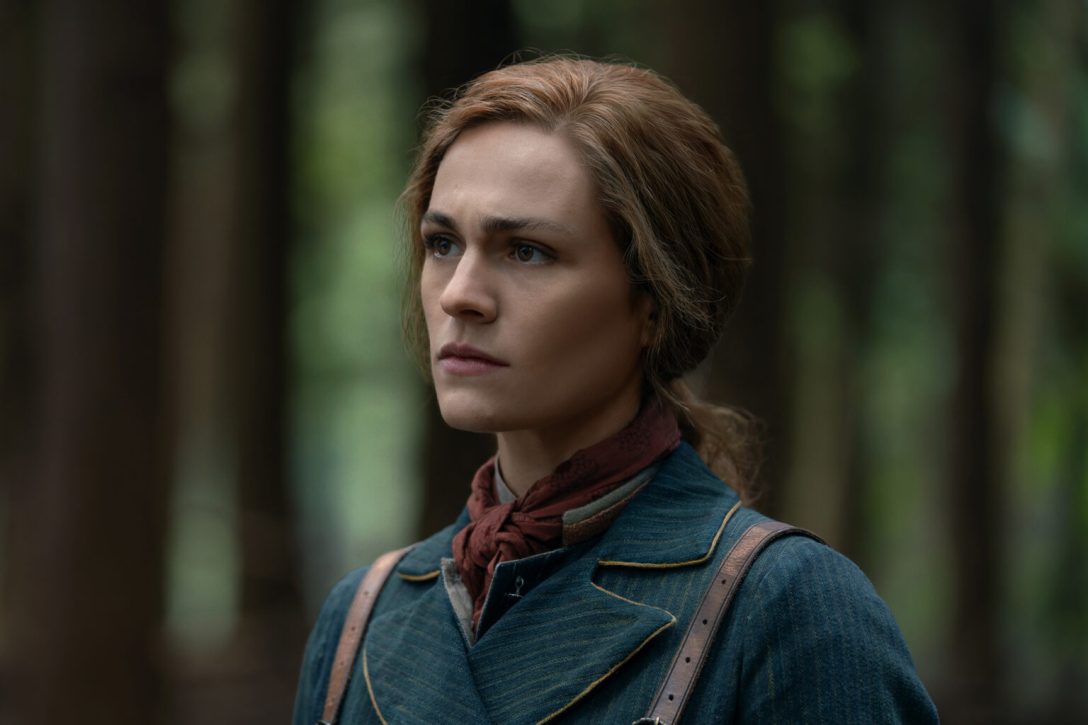
Riddle me this: What walks on four feet in the morning, two in the afternoon, and three at night?
Warning- Contains spoilers from Outlander Episode 802: Prophecies
In case it’s been a minute since your high school humanities class, let’s revisit the story of Oedipus. Prophesied to murder his father and marry his mother, Oedipus runs away from his adoptive parents in order to escape his fate. On his way to Thebes he quarrels with an older man and kills him. Upon arriving in Thebes, Oedipus correctly answers the riddle set for by the Sphinx (see above), frees the city, and wins the hand of the recently widowed queen. Years later, in an effort to rid the city from the grips of plague, Oedipus discovers that he himself had killed the king (the old man, Laius); his wife, he therefore discovers, is actually his mother. Humanity, the myth has argued for centuries, is forever flawed. And often the choices we make are made for us, no matter how much we try to exert control over our own destiny. Our lives have been prophesied.
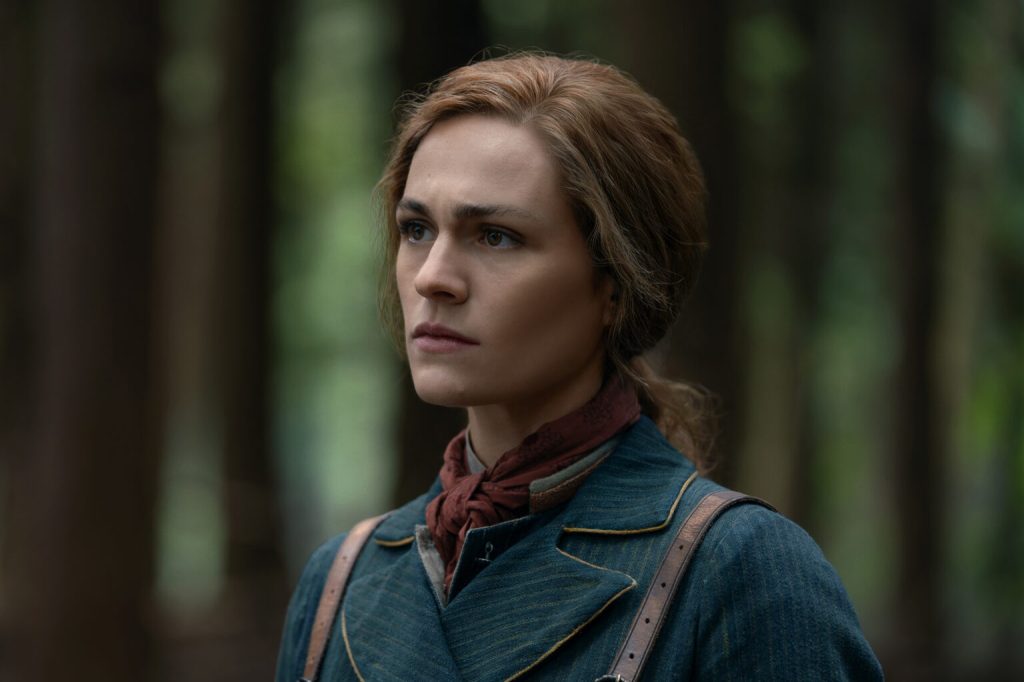
The word “prophecy” derives from the Greek prophētēs, meaning “one who speaks for a god,” and in Greek mythology a prophecy or otherwise prescribed fate was unchangeable…the more one might resist or struggle that which had been prophesied the tighter the figurative noose became. The story of Oedipus is arguably the best-known example of the inevitability of fate. And for the purposes of this episode, it is an examination of how little or how much control our characters have over their own lives.
This episode is a story about death. More specifically, it is about stories about death. Frank tells Jamie of his own death, the Continental soldiers tell William about Ben’s death, Claire tells the bees of Amy’s death, and Captain Cunningham tells the story of his son Simon’s death…as well as the story about his own foretold death.
But! This episode is also a story about life! It is a story about a baby being born (Oggy), about two lives joined together (Mercy and Henry), and of the direction our lives might take in our older years (Mrs. Cunningham). We walk on four legs, then two, then three.
And while no one is marrying their mother in this episode (I don’t think), this hour is a story about how much we can or cannot control. Between birth and death and from love to loss…this episode examines that which can or cannot be prevented and the choices we are allowed or not allowed to make. We cannot always stop a bear or legally marry who we want. We may ask people questions but we cannot force them to answer. We can make decisions, thinking them correct, only to learn that the decision has already been made for us. In this way, life is an endless riddle put forth to us as we stumble along toward our destiny.
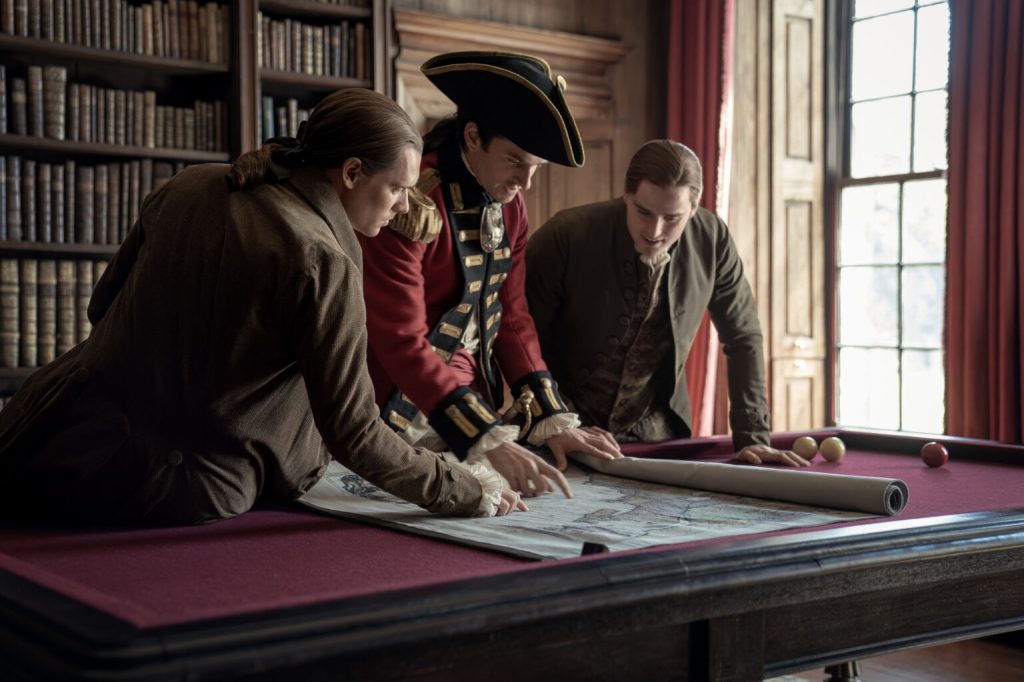
The episode opens on this theme immediately during a flashback, when Ben informs William and Henry that he has been assigned to Boston for his military service. And although the purchase system of the eighteenth century meant the Grey family could choose Ben’s rank, where an officer was sent for service was still usually not within their control (although I’m sure Hal could curry some favor). William gifts Ben his prized General Roland miniature (put a pin in that) as a parting gift, which Ben promises to keep close to him always.
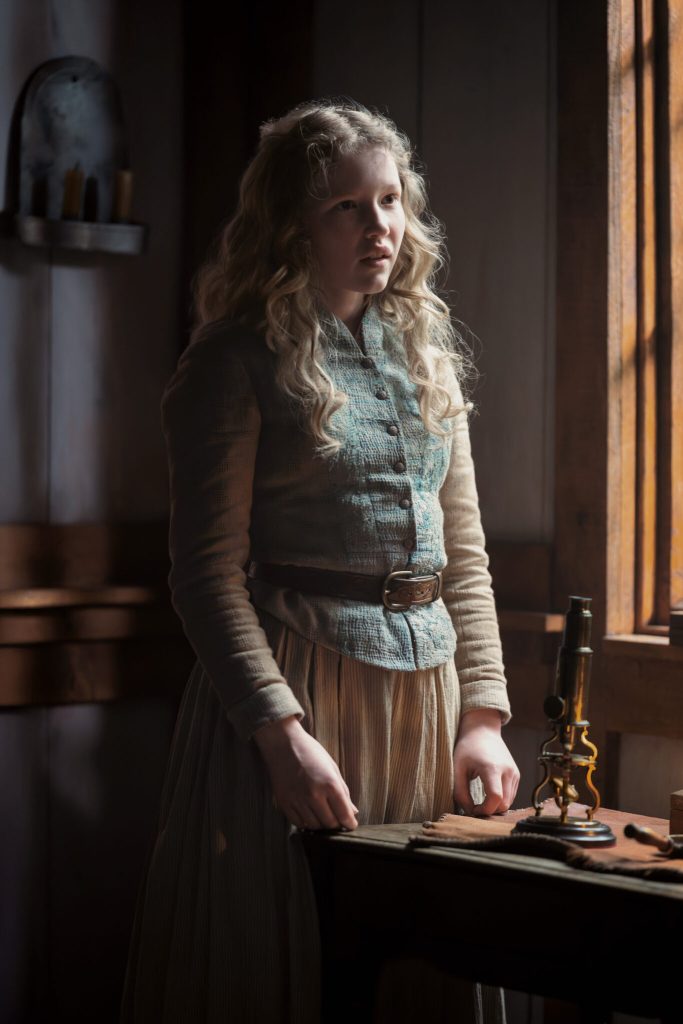
Fast forward to Fanny observing the microscopic organisms in a droplet of water and an amusing but somehow Outlander-appropriate conversation about mucus membranes ensues between he and Claire. This conversation makes Fanny miss Jane, who seemed to love the curiosities of the natural world…remember her gazing upon the aurora the night of her death? And, again, we see Claire reiterate our theme when she tells Fanny to be circumspect about her background when talking to the Ridge tenants: we cannot always control what people think of us, but we can control what we allow them to know.
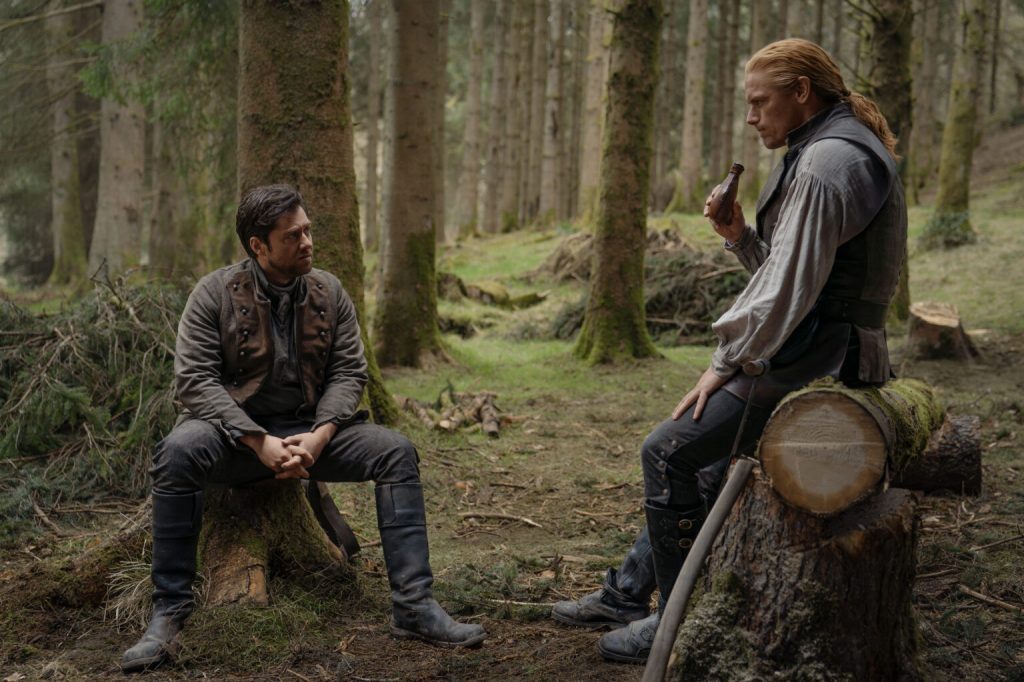
While Jamie and Roger are building the new MacKenzie house (I think?), they have a nice moment in which Roger tells Jamie about Buck and how we should forgive family for honest mistakes (ahem, like also accidentally giving us to the Mohawk). Forgiveness, too, is within our control. We can allow grievances and regret to consume us, or we can extend forgiveness. It’s our choice.
Captain Cunningham enters the scene, and although Jamie continues to view the man with some degree of wariness, Cunningham continues to prove himself congenial and helpful. Upon realizing they’re all Freemasons plans are made to hold a lodge meeting for the Ridge.
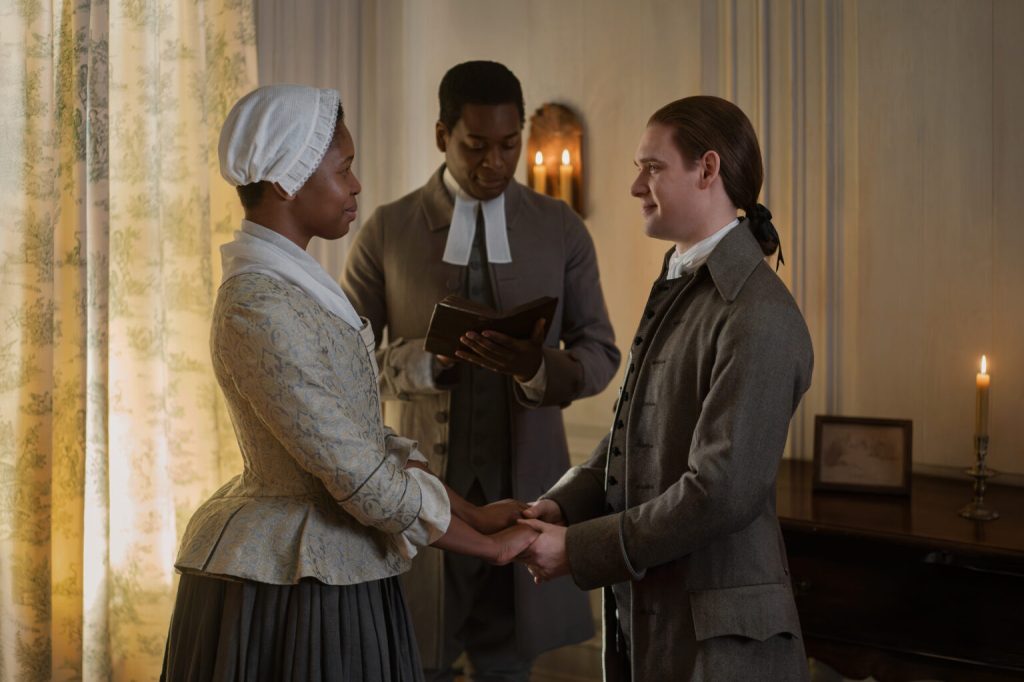
William attends the marriage of Henry and Mercy Woodcock in Philadelphia, and this was a lovely scene made more poignant by the knowledge that bans on interracial marriage in this new country would be allowed for nearly another 200 years (it should be noted, however, that Pennsylvania was the first state to overturn its ban on interracial marriage in 1780). Henry and Mercy’s illegal wedding is yet another example of decisions made for us that are beyond our control. After somewhat awkwardly toasting the happy couple, William privately admits to Henry that his brother Ben is presumed dead.
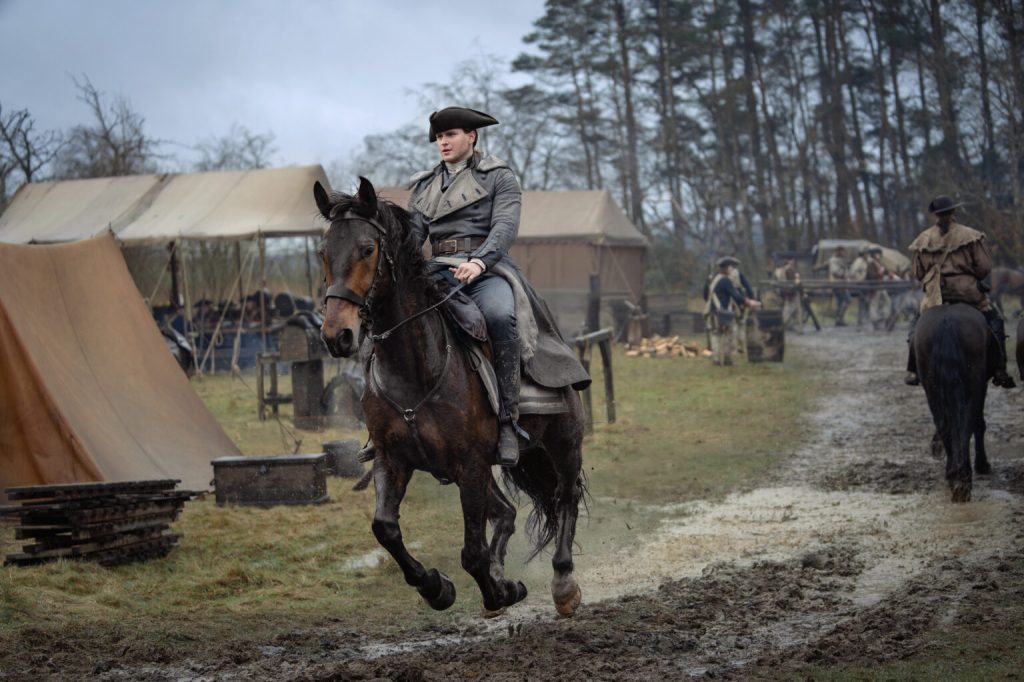
As with last week’s recap, it’s more expedient to summarize William’s side-story for the remainder of the episode. As he has promised to both Amaranthus and Henry, William makes inquiries at the Continental encampment regarding Ben’s death. While Captain Ronson is rather dismissive of William’s plight (basically giving a “he’s dead, what more do you need” sort of answer), Private Thomas somewhat cheerfully tells William that Ben’s death was unexpected. Ben appeared to have recovered from his illness, so the private was surprised to learn he had passed. Upon discovering that the Roland miniature is missing from Ben’s uniform, William takes it upon himself to literally and figuratively dig up the grave for more answers…and discovers that Ben is not, in fact, the man buried in the site that claims as much. It’s all very mysterious and creates more questions than answers for William, who is determined to exercise some control over the loss of his cousin.
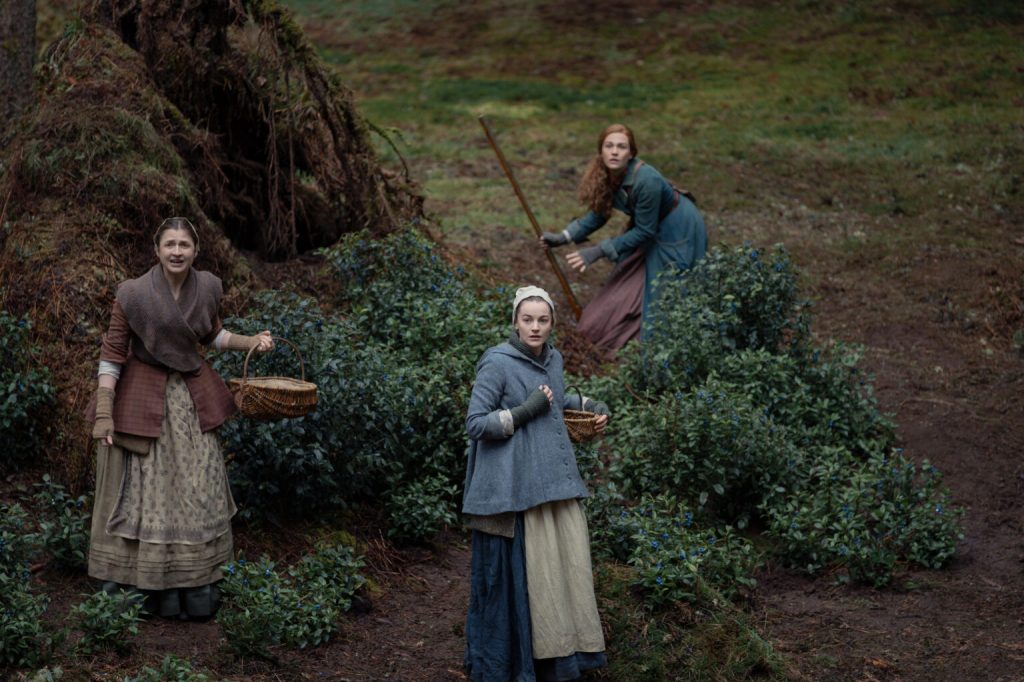
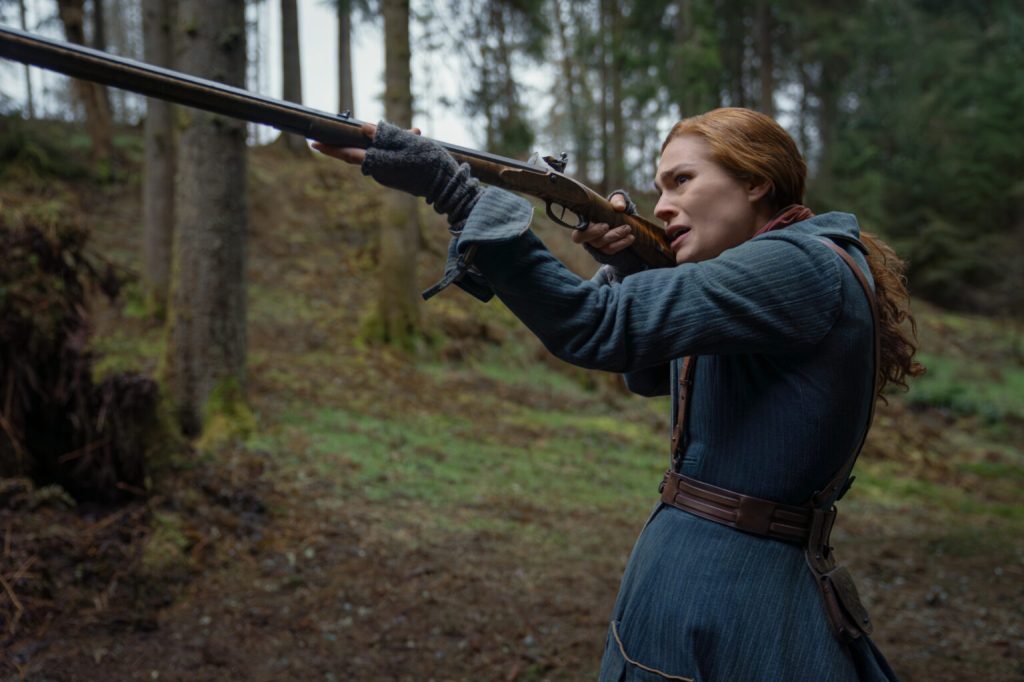
Ugh, and now for the heartbreak. Amy, Brianna, Lizzie, and Rachel are picking blueberries and sharing birthing stories (again, something that is usually beyond our control no matter how much we plan) and amid this discussion of how sometimes quickly life begins, an unthinkable tragedy reminds us how quickly it can also end. A bear attacks Amy Higgins, and although Brianna raises and shoots her rifle the tragedy is beyond her control.
And saving Amy’s life proves beyond Claire’s control as well….there is nothing to be done in a world in which blood transfusions, neurosurgery, and antibiotics do not yet exist. Amy’s death feels especially devastating after hearing her muse about the recent good fortune of her life. Was it prophesied that she should die? Probably not…Amy, like most of us, led a small life in a small part of the world. The vast majority of us are not destined for epic mythologic adventures.
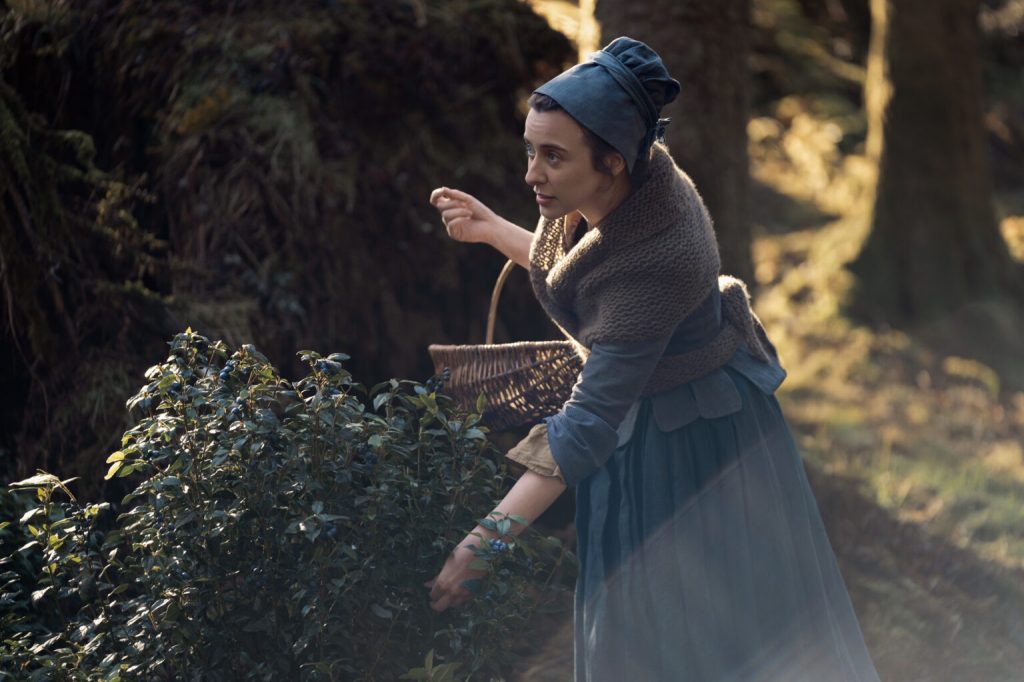
And yet, whenever tragedy strikes do we not all wonder about the million little decisions that led to this one instance of sorrow? If it hadn’t rained then the ants might not have been out among the blueberry bushes, and Amy might therefore not have moved away from the group, and the bear may not have seen her as a threat, and she might still be alive. It was all very much out of Amy’s control…the culmination of many small instances and decisions that mean nothing in isolation.
Mrs. Cunningham showing up to assist Claire with Amy’s body may be one of my favorite scenes of the entire series. They are very different women, but in Mrs. Cunningham perhaps there is a small prophecy of an older version of Claire: a no-nonsense woman who understands (and has experienced) grief but also knows there is work to be done in times of death, and that work is left to the capable hands that are willing to do it. Also, I’m sure this is mostly coincidental, but the name Claire suggests clairvoyance or illumination, while Elspetch (as a form of Elizabeth) means “from God.” How’s that for a theme? Their combined names are more or less the definition of “prophecy.”
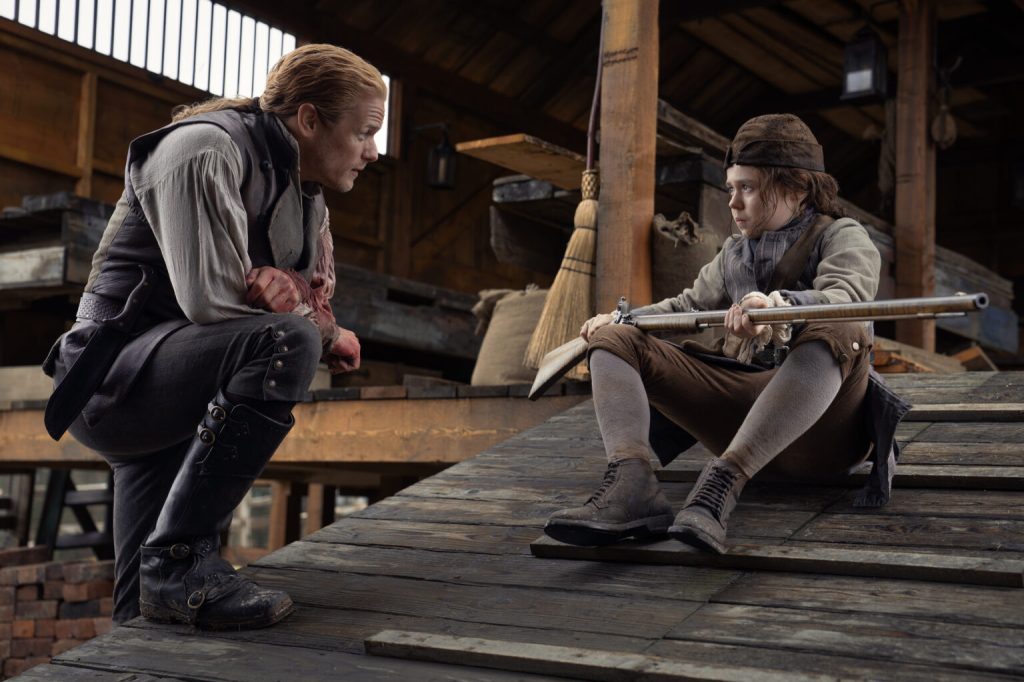
Jamie assures Evan and Aiden that the kill of the bear is theirs as a means to avenge Amy’s death, but whatever comfort they may have in that thought is mostly dashed upon discovering Captain Cunningham has already single-handedly slayed the animal. Again, it’s a disappointment that is beyond Evan and Aiden’s decision. Cunningham merely wished to do the right thing, not knowing that promises had already been made.
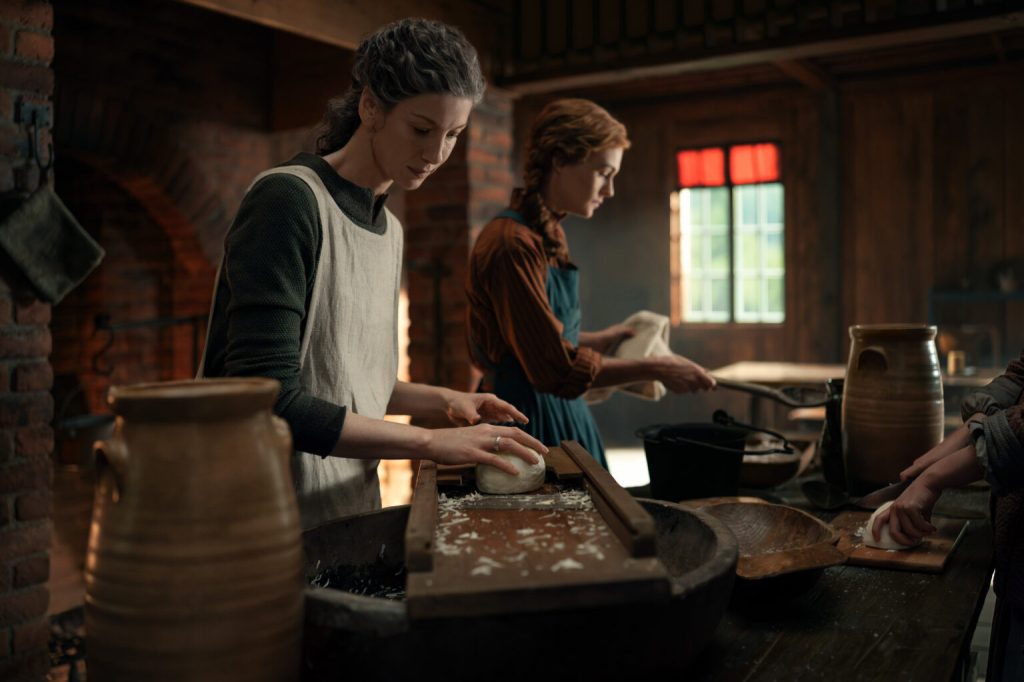
In happier news, Rachel goes into labor while canning cabbage and sauerkraut. Did you take note of Claire’s seemingly throwaway line about not being able to control the seasons? Very on-theme. A healthy baby boy is delivered, and it is to Claire and Brianna’s credit that they do not immediately blanch at the suggestion of Marmaduke for the baby’s name.
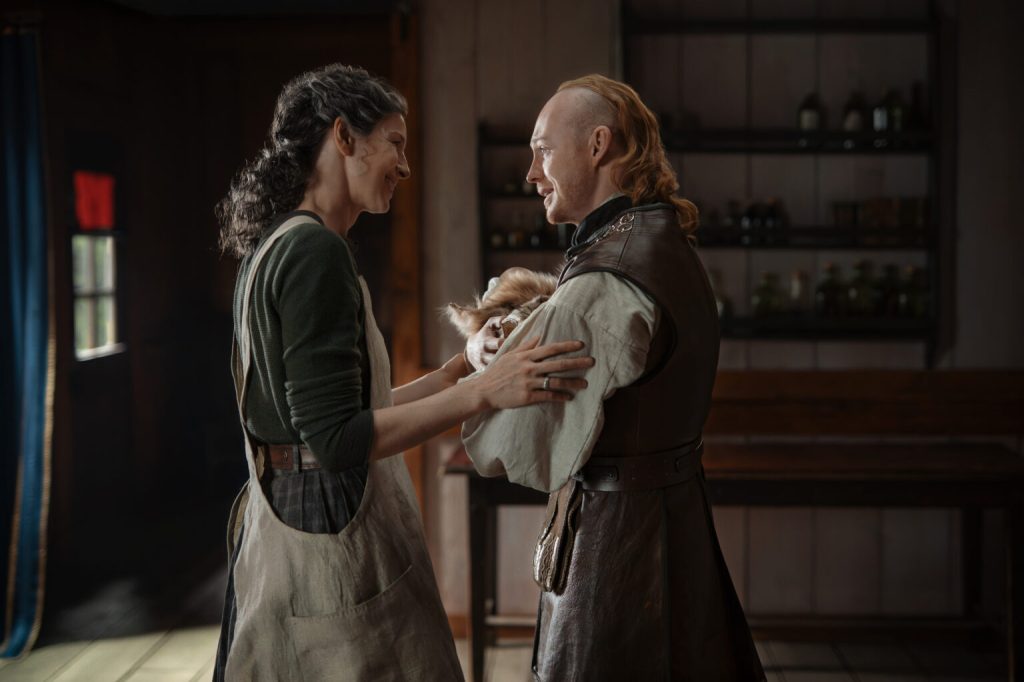
Jamie serves as a sort of prophetic figure as Ian embarks on his journey of fatherhood. Jamie regretfully tells Ian that he never knew any of his children in infancy (the inclusion of Fergus here was important), and therefore cannot guide him during this stage of fatherhood. But kindness, empathy, and fairness are enduring traits of fatherhood no matter the stage, and in this way Jamie sets more of an example than perhaps he realizes.
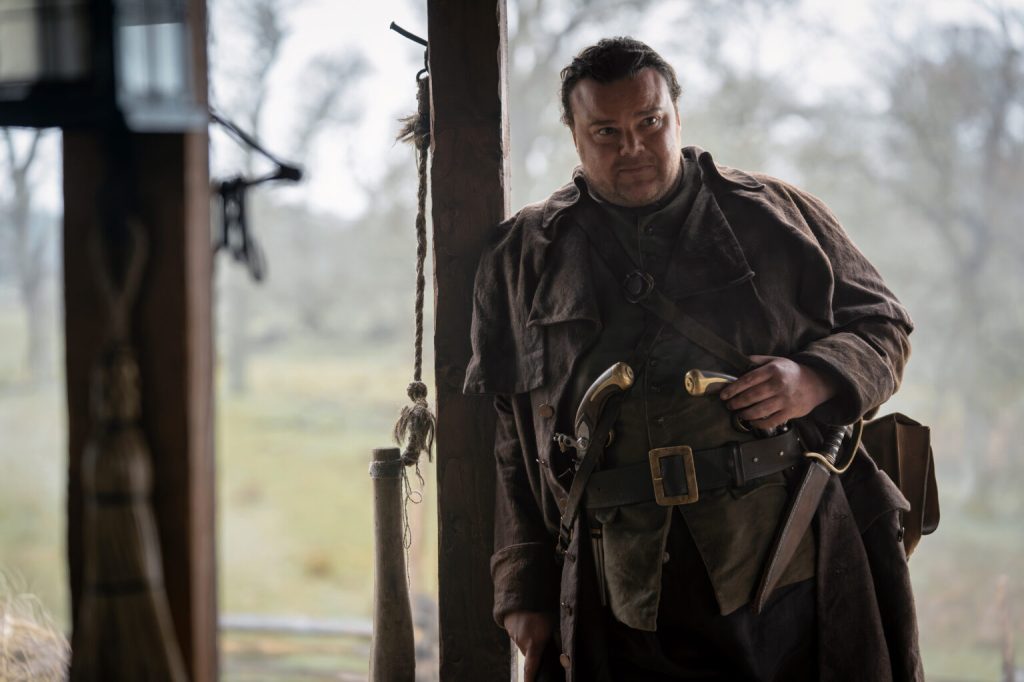
There is a disquieting tone to this episode, which is unsurprising for one that more or less revolves around death (and the stories we tell about death). When Benjamin Cleveland walks onto the Fraser property we feel the weight of the prophecy as foretold by Frank. Our characters have returned home to escape war, but in walks trouble without an invitation. Like the Fates and their threads of fortune or misfortune, the more our characters do to possibly avoid tragedy the more they entangle themselves in its web.
While Cunningham seems to take comfort in the knowledge of his known death, Jamie is haunted by the knowledge of his own foretold demise. It, too, has been prophesied. Frank’s book is correct…twenty-eight Patriot men will die in the Battle of King’s Mountain. Is Jamie meant to be among them?
At every turn our lives are determined by powers outside our grasp. Governments, military, disease, trauma…they fall like stones in a world that is not of our creation. We crawl, then walk, then hobble toward each stage of life, answering riddles along the way and trying to solve the mysteries of our own lives as best we can. Hubris, Oedipus teaches us, is our downfall. Truth, it tells us, must always be sought. And so while some characters (Cunningham) may take comfort in the myth of their own destiny, it is up to others (Jamie, William) to uncover the truth. Like Fanny and her microscope, it’s there if we look close enough.
Slàinte.

 Outcandour
I appreciate how you find and bring out the overall themes of each episode that I haven’t always thought about. I thought that the writing for the episode was really well paced and gave time especially for the characters’ emotions about the events to unfold. Perhaps some of that was also in how Caitriona directed the episode. I am so impressed by how she directed an episode where she was in a good portion of the scenes.
LikeLiked by 1 person
I thought Caitriona did a really wonderful job with directing also…the pacing and transitions felt so natural.
Thank you as always for reading 🙂
LikeLiked by 1 person