
Could this be the most fun season of Outlander yet? I’m as charmed by this episode as Claire is of Lafayette. Let’s dive in.
Warning-Contains spoilers from Outlander Episode 714: Ye Dinna Get Used to It.
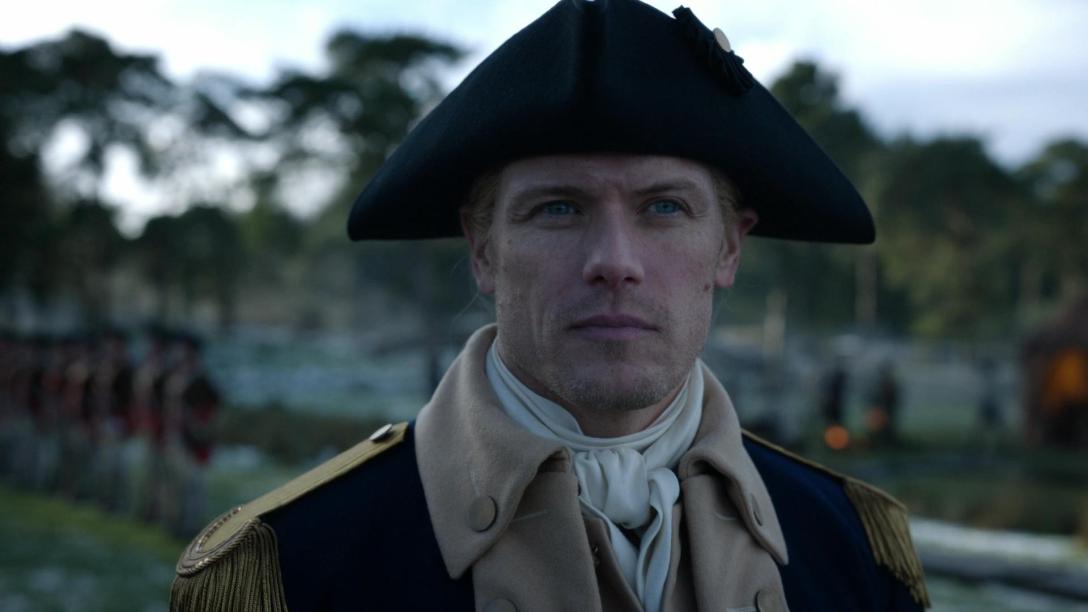
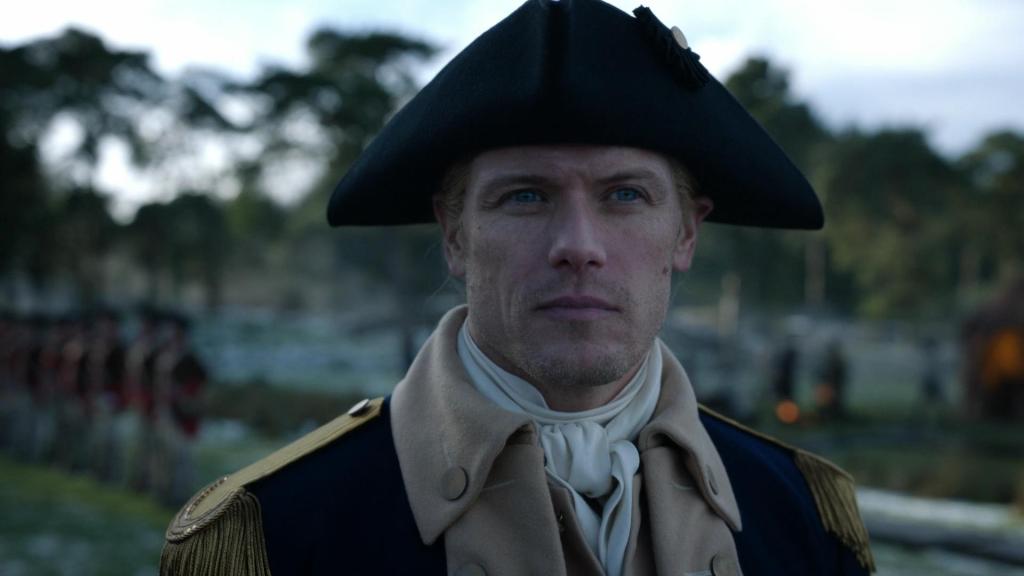
I’ll just get this out of the way now: If even a fraction of our American generals were as handsome as Jamie Fraser, there’s no way anyone else could have won this war. Not until the whites of their eyes? I’m thinking those baby blues stopped everyone in their tracks.
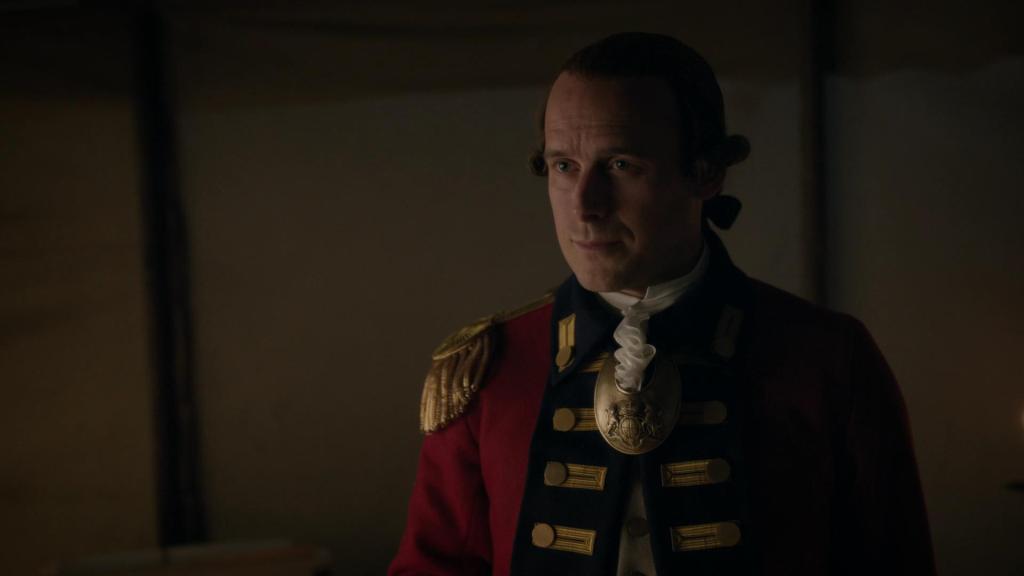
The writers usually don’t know when an episode will air, so it’s hard to infer too much symbolism between its content and its timing. Still, I’d like to think they married nicely this week as we head into January, as this episode was chock-full of double identities. Janus, the Roman god of beginnings and endings, looked forward and backward with his two faces. And so everywhere this episode we see people assuming more than one face: Percy Beauchamp or Percival Wainwright? Bertram Armstrong or John Gray? Captain Richardson or….? (I won’t spoil it for non-book readers, but if you want a hint go back and rewatch this episode very, very closely).
But more than double identities, this episode at its heart was about parenting and this simple truth: We don’t give up on our kids. We don’t give up on our actual children (Roger and Bree and Jem, Lord John and Jamie and William), our stand-in children (Jamie and his soldiers), or our metaphorical ones (Washington and the United States). The title of the episode most obviously refers to Jamie’s quip about imprisonment at the end of the hour, but more broadly it also refers to the love, frustration, joy, and pain we endure as parents. Ye dinna get used to that, either.
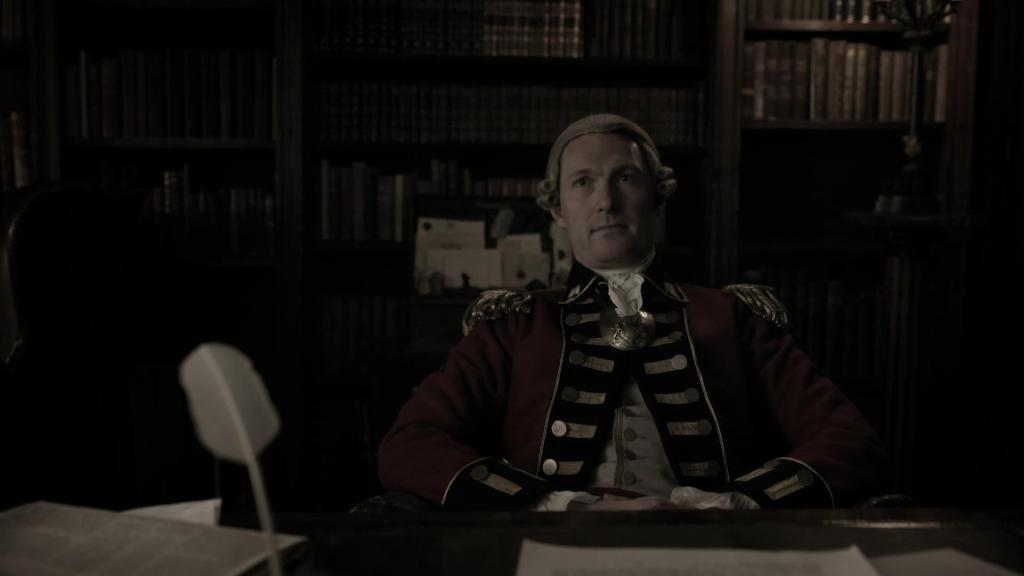
I despaired a few weeks ago about the lack of Hal in Philadelphia, and luckily we were treated to his presence this week as we flash back to London 1775. Hal and John debate the merits of war versus negotiation with the American colonies, and here we see the theme of parenthood already presented—Hal argues that the colonies are like wayward children needing punishment, while John encourages a more diplomatic approach to peace. Promise me, Hal implores of John, that you’ll never accept the idea of American independence.
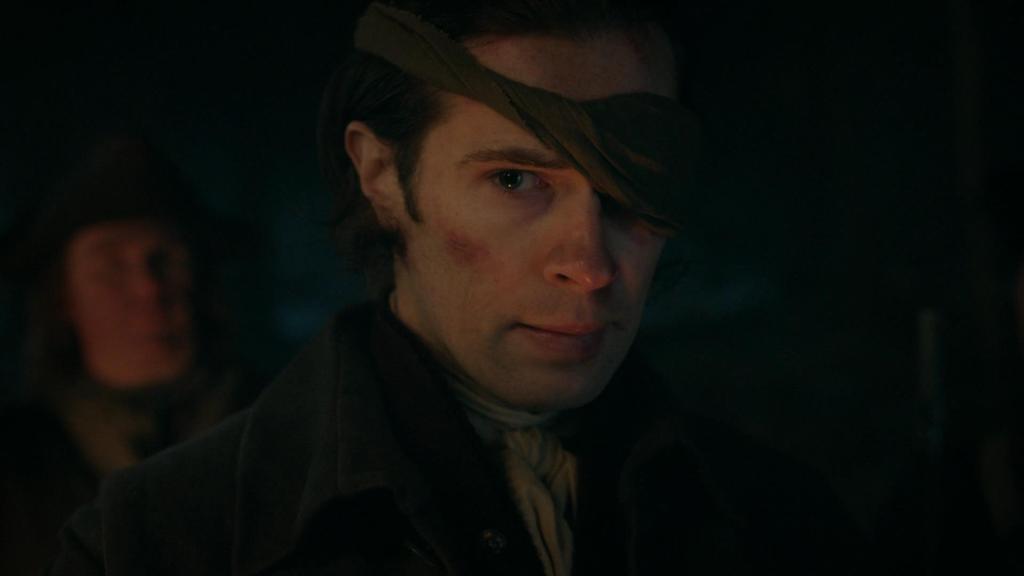
But how many promises do we make as parents that we fail to keep, either because of circumstances that force our hand or an understanding that changes our prior perspective? Cut to “Bertram Armstrong” swearing allegiance to the United States of America, as Lord John fights to stay alive for the sake of his own child. Interestingly, the Oath of Enlistment hasn’t changed all that much in the past 250 years.

In the novels Claire and Jamie stay at the printshop while in Philadelphia, but since Fergus and Marsali aren’t in this back half of the season changes had to be made. I initially found their occupation of Lord John’s house a bit presumptuous, but on closer examination it makes perfect sense. Despite the often complicated nature of their relationships, Lord John is arguably their closest friend—staying in his house ensured that it wouldn’t fall into less responsible or destructive hands once the British abandoned the city.

The home, as we come to learn, also makes a perfect spot to host General Washington and The Who’s Who of the American Revolution, including one adorable Gilbert du Motier, Marquis de Lafayette. Caitriona Balfe did some wonderful acting as Claire runs into Lafayette at the market in preparations for the dinner. Watch as her face transforms from one of polite pleasantries to genuine amazement and joy at the realization of whom she is meeting. This was one of the most charming scenes in the history of the series and I probably watched it about six times.
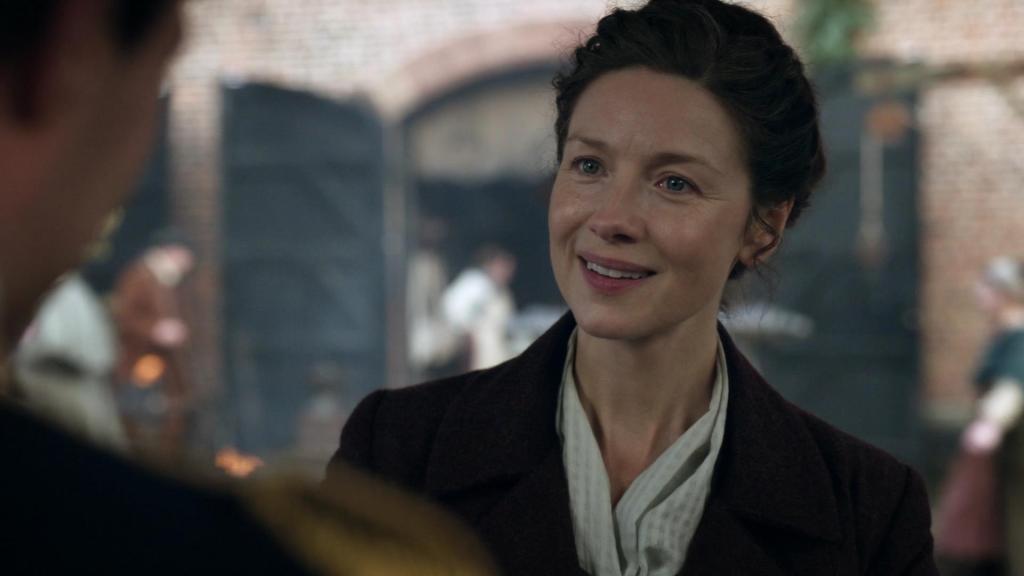
The dinner in question was equally as entertaining, and I didn’t realize I had been missing some humor from the show until I watched Claire endure the chewing and swallowing of jellied eels. “I am fond of marjoram,” might have to be incorporated into my regular vernacular. Keeping thematically, this is the sort of meaningless thing you say to your children when you need to give a non-committal but enthusiastic answer: You want to play in the NBA when you grow up? Wouldn’t that be fun!
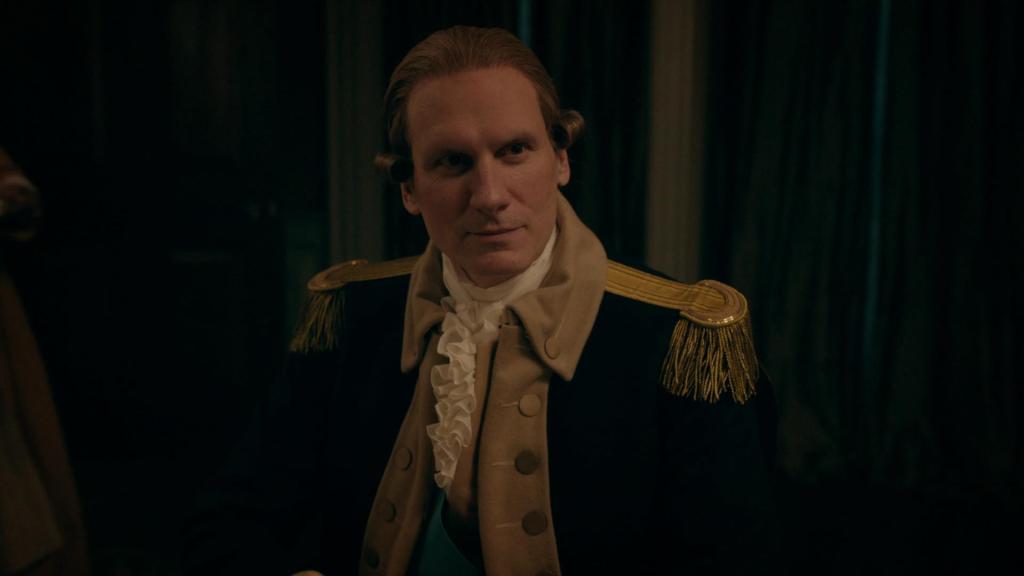
During dinner Washington admits that he views Lafayette as a son, and fatherhood is an especially interesting theme when discussing Washington. Most obviously, he will ultimately become the symbolic father of the country. Like other men in the Outlander universe, Washington raised children who were not his own; he was unable to have his own biological children but raised Martha’s children (and later their grandchildren) as his own. Moreover, Washington was beloved by his men and was viewed a father figure within the ranks. When we see Jamie later taking the time to learn the names of his soldiers- many of them no older than boys- we see this parallelism carried through. The best men in this world see the raising of children as a universal responsibility, regardless of parentage.
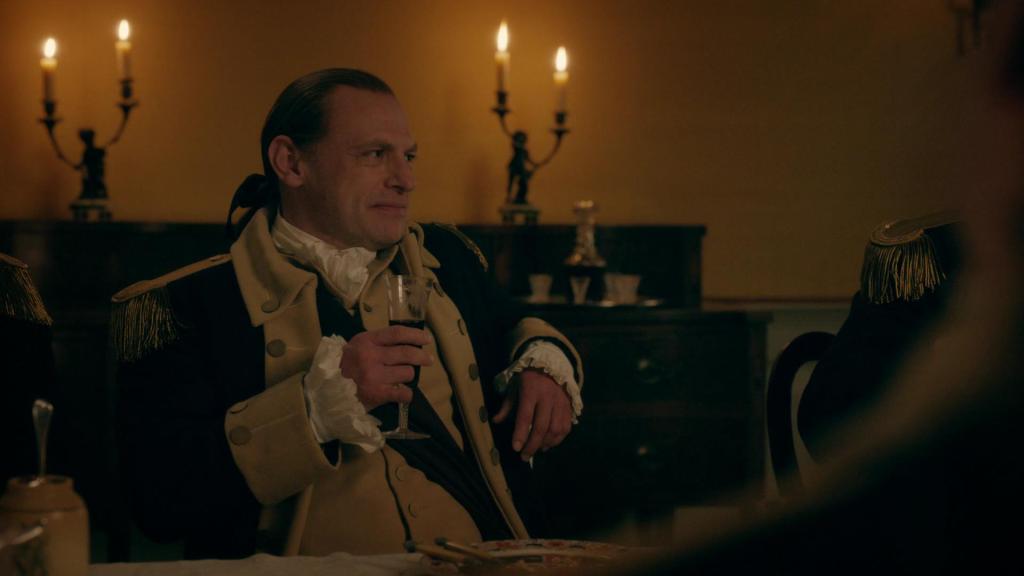
And being a general often means managing the childlike antics of lesser-ranking men. Such is the case with Charles Lee, who undoubtedly thinks highly of himself but about whom history will be less flattering. Fun facts: Lee suffered from chronic gout (like Hal!), horribly mismanaged money throughout his life, petitioned hard for the Commander in Chief gig, and was courtmartialed after the events of Monmouth (which I’m sure we’ll see in the next episode). Imagine how different the world might be had Lee been in charge…a man focused on his own glory rather than the enduring legacy of those he leads?

The British are preparing for battle, too, and we check in on William as he delivers dispatches from General Clinton, subsequently receives a tongue lashing for his dirty uniform, and is then startled to discover Jane and her sister Fannie have sought him out within the camp. Charles Vandervaart is doing a really nice job with this role, showing both the gentleman this character was raised to be and the inherently honorable man he comes by genetically. Good manners, kindness, and a sense of decorum? That would be Lord John. Agreeing to help someone first and ask questions later, consequences be damned? That would be Jamie Fraser.
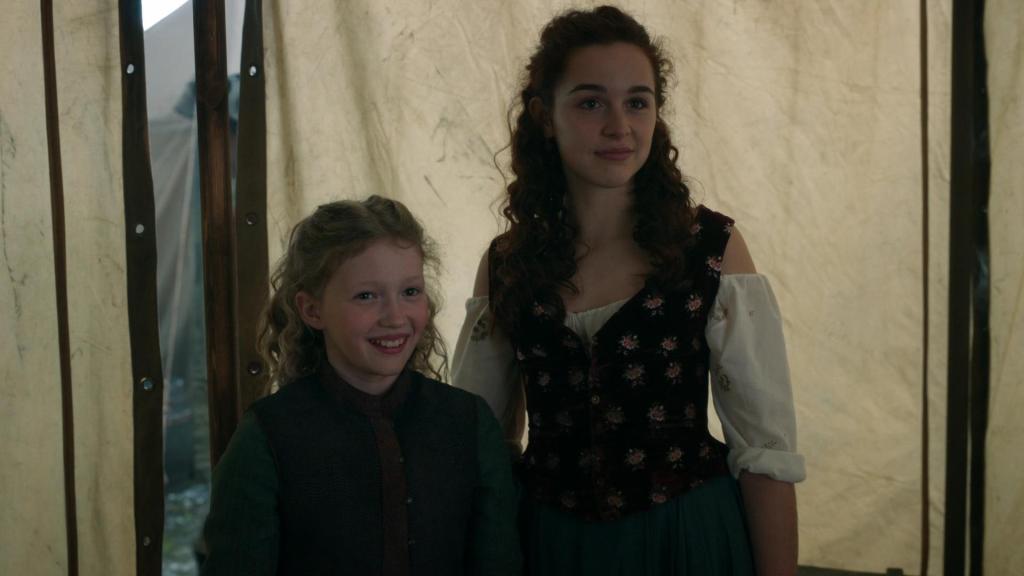
We come to learn that Jane and Fanny have run away from the brothel after stabbing Captain Harkness, who undoubtedly had what was coming to him. Jane has to know that her actions are sure to catch up with her, and so her enlistment of William’s help is insurance that Fanny will be safe when that time comes. Again we see the theme of a parent (or parent figure, in this case), looking beyond themselves for the future of their children.

In the actual future and in preparation for a battle of her own, Brianna stakes out Lallybroch and discovers Rob Cameron and his cronies have captured the fort, so to speak. Upon realizing that she has put Fiona and her family in danger, Bree comes to the conclusion that she and the children are likely safest with Roger…wherever and whenever he may be.
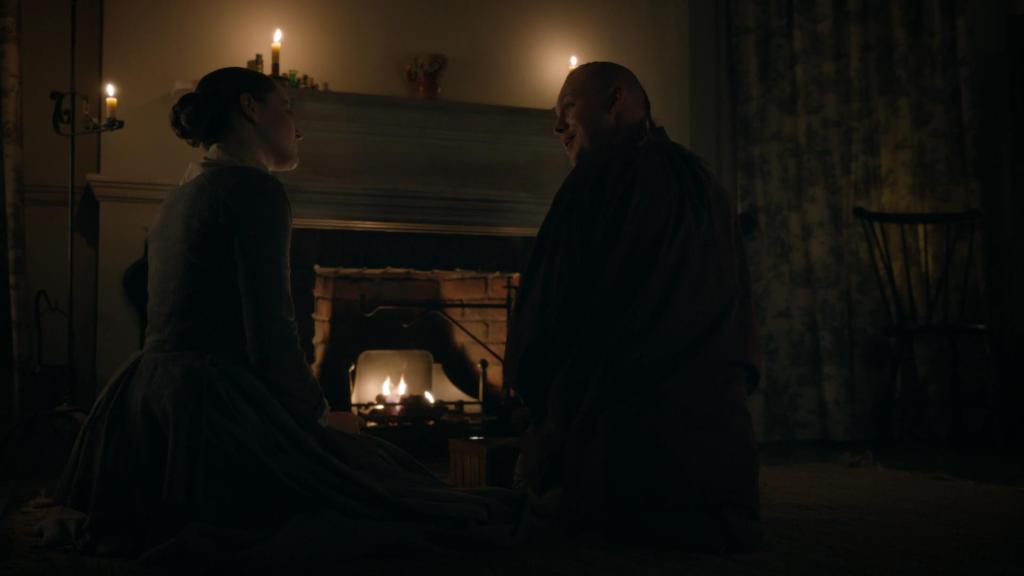
We check in on Ian and Rachel, who appear to still be in the throes of newlywed bliss. Keeping thematically, we see Ian converse with the spirit of his father…the work of a parent is never finished, even in death.
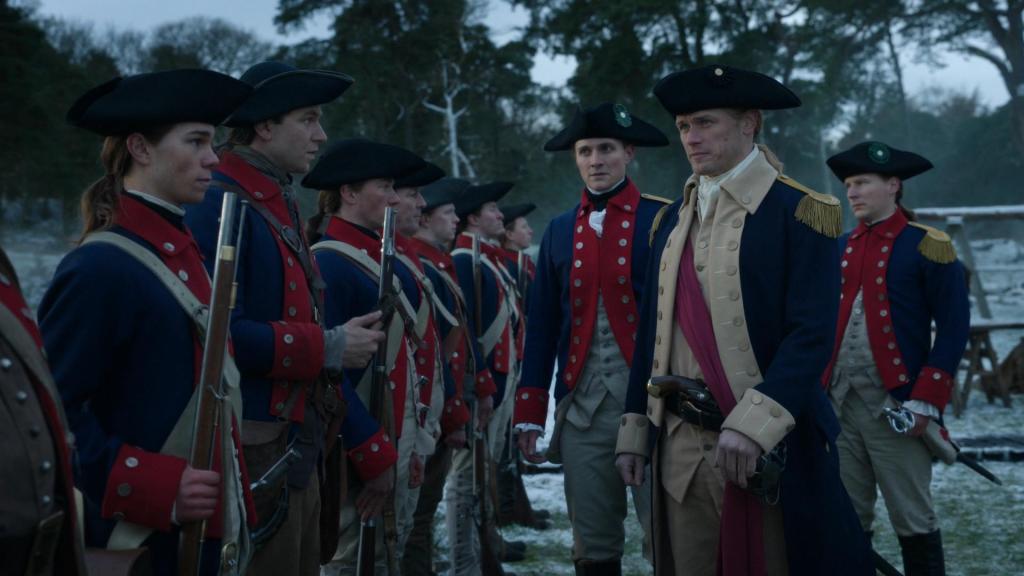
Jamie prepares his men (and I use the term loosely as these soldiers are very young) and a contrast is notably made between his leadership style and that of the British officers. While William is chastised for his dirty coat and lack of gorget, Jamie rightly notes that proper dress matters less in a battle than proper preparation. While Colonel Waldron could barely be bothered to learn William’s name, Jamie attempts to know his soldiers personally. And here we get another glimpse of the father that he could have (and should have) been…one that sees his soldiers as individuals rather than nameless extensions of himself.
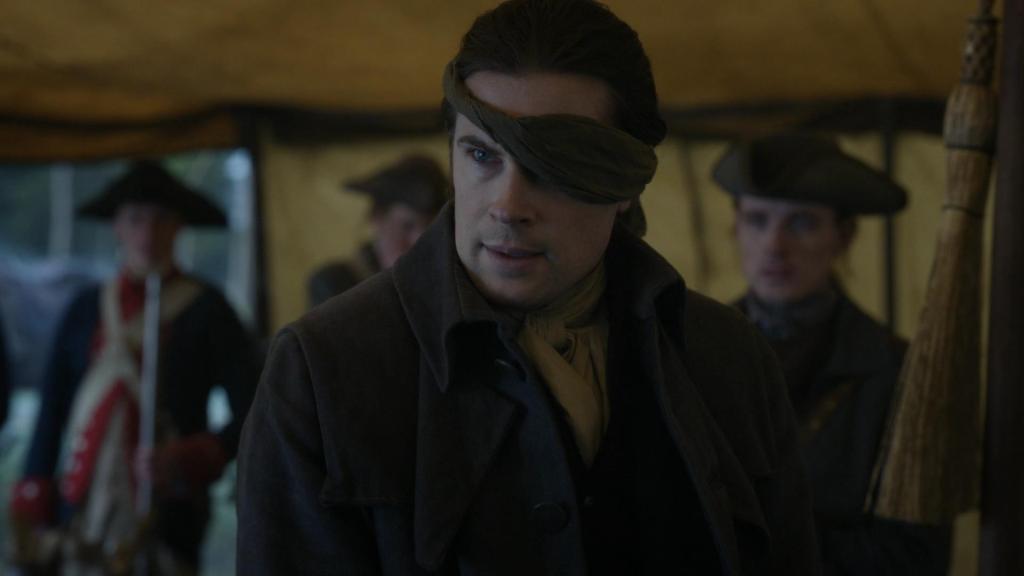
Amid the Continental assembling stumbles (finally) one Lord John William Bertram Armstrong Grey. When he surrenders to Jamie it is yet another move in their ongoing metaphorical chess game. Now it is John who is a prisoner of Jamie’s, and now it is Jamie who holds John’s life in his hands. Checkmate.

Playing his own sort of game is Captain Richardson, who sends William into a trap of Hessian soldiers under the guise of a legitimate mission. And who should come to warn Lord John of this duplicitous plan? One Perseverance Wainwright, in the actual flesh. Did I do a little squeal of glee with this reunion? Yes, yes I did.
(And here I must encourage everyone (again) to read the novellas. Why so much tense and fraught body language between Lord John and Percy? Did Roger’s father every make it back? And who sent Jerry MacKenzie father on that mission in the first place? It’s all in the novellas!)
Long ago, Jamie rode away from Helwater, knowing that his leaving was best for William. Now, in visual callback to Of Lost Things (Episode 304), it is John riding away from Philadelphia as both men still endeavor to do right by their son. And this is what it means to be a parent—putting aside personal strife and risking everything for the welfare of our children.
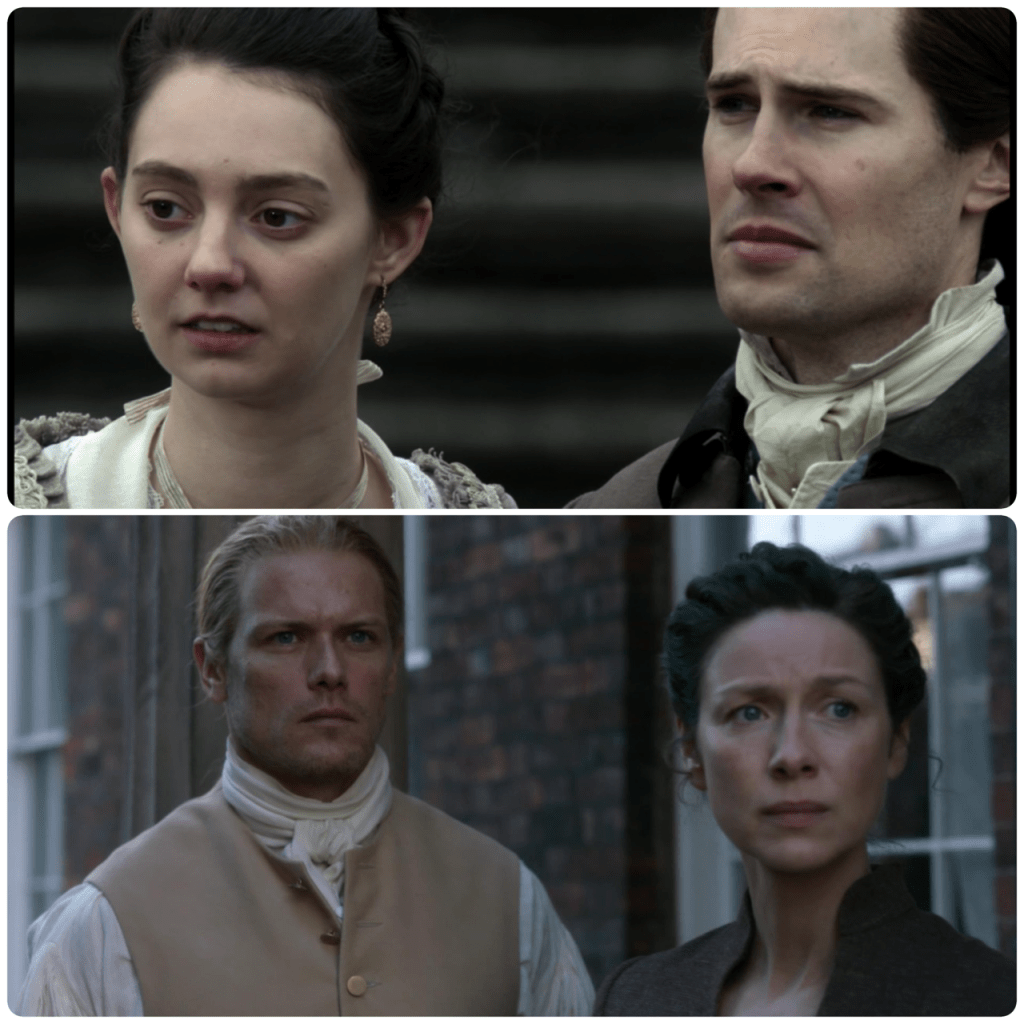

Revolutionary War general Henry Knox wrote to George Washington in the Fall of 1777, just prior to Washington’s encampment at Valley Forge and one year before the Battle of Monmouth. In his letter, Knox stressed that “the People of America look up to you as their Father, and into your hands they entrust all.” As parents we know that we are flawed, and our answers and our actions are often lacking. But our children trust us, regardless, and we strive to make ourselves worthy of that trust. We shelter them from bad men, we prepare them for battle, and we set them forth into a world full of deception and greed. And how poignant, especially, such actions are in a story about time travel. Go save our son, Jamie tells John, knowing that the future—our future—depends on the children.
Sláinte.
Screencaps provided by Outlander Online.

 Outcandour
Just here to tell you how much I love and look forward to reading your recaps. Happy 2025 to you and your family, from Malaysia 🙂
LikeLiked by 1 person
Oh thank you so much! And Happy New Year to you, too! You’ll get to 2025 before I will…let me know how the year looks so far!
LikeLike
I love your analysis of Outlander! Wonderful work.Thanks,Debbie
Sent from the all new AOL app for iOS
LikeLiked by 1 person
Thank you!
LikeLike
I love your insight into each episode. One parent you forgot was Herself. Diana wrote this episode. She gave birth to both the novels and the episode. It is through her words that we can relate to her perceptions of parenthood whether we birth, adopt or remain childless. Remember that we have all been children of parents in some form or another. Diana is perceptive enough to see her characters as both sides of the coin-as parents and children!
LikeLiked by 1 person
So true! She really is able to give so much depth to all the families in her stories.
LikeLike
I always look forward to your recaps! I didn’t catch the ending’s parallel to Of Lost Things. Thanks for that! I agree that the novellas are SO good and so important at filling in the gaps, especially the ones about Jerry Mackenzie.
LikeLiked by 1 person
They are so good and I’m enjoying re-reading them this season! Thanks so much for reading and commenting.
LikeLike
Thank you so much for your insightful meditations. I look forward to them each week.
LikeLiked by 1 person
Thank you so much.
LikeLike
Thank you for another great re-cap. What is the best novella to read? Which one answers the questions about John and Percy, and about Rogers’s father?
Thanks!
Maureen
LikeLiked by 1 person
Thank you! “A Leaf On the Wind of All Hallows” is the one to read for the Jerry MacKenzie backstory. The Lord John books are best read in sequence but the Percy story is mainly in Brotherhood of the Blade.
LikeLiked by 1 person